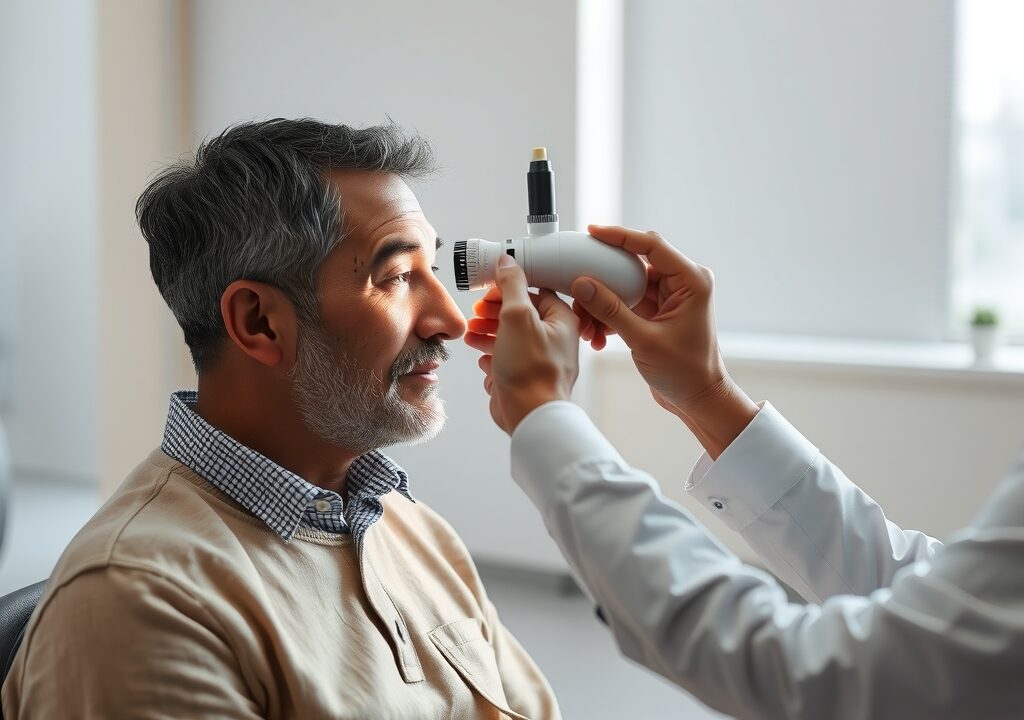
The Food and Drug Administration is requiring new safety information on GLP-1 medicines after reviewing evidence suggesting a possible link to a rare but serious eye condition called non-arteritic anterior ischemic optic neuropathy, or NAION. The condition can cause sudden, painless vision loss in one eye and may be permanent.
The update affects the drug class widely used for type 2 diabetes and weight management, including semaglutide and tirzepatide products. FDA says the change is based on its review of clinical trials, animal data, postmarketing reports and published studies, and that the warning will be added to labeling for all GLP-1 receptor agonists.
What the FDA changed
FDA announced on November 9, 2026, that manufacturers must update the warnings and precautions section of prescribing information for GLP-1 receptor agonists. The agency said it is informing both patients and clinicians about a potential increased risk of NAION, while also emphasizing that the condition is rare.
GLP-1 medicines have become a major part of treatment for type 2 diabetes and obesity, and some products in the class also have approvals for reducing cardiovascular risk, slowing kidney disease progression in people with diabetes and chronic kidney disease, and treating obstructive sleep apnea in adults with obesity. The new labeling change does not mean these drugs should be stopped automatically, but it does mean eye symptoms should be taken more seriously.
Why this matters
NAION affects blood flow to the optic nerve. FDA says it can lead to acute, painless vision loss in one eye, including permanent vision loss. The agency’s concern is not that this side effect is common, but that it is serious enough to warrant clearer labeling and faster recognition if symptoms appear.
For people taking a GLP-1 medicine, this is especially relevant because many users already have diabetes, high blood pressure, sleep apnea or other conditions that can also affect the eyes or optic nerve. FDA notes that these overlapping risk factors can make it difficult to tell whether a reported case is caused by the drug, by an underlying medical problem or by both.
What the evidence actually shows
FDA said it reviewed a meta-analysis of 126 randomized clinical trials across multiple GLP-1 drugs. In that analysis, the agency identified 15 probable NAION events overall, with 10 among GLP-1 users and 5 in comparator groups. FDA reported rates of 6.4 cases per 100,000 person-years among GLP-1 users versus 3.8 cases per 100,000 person-years among people taking placebo or a non-GLP-1 glucose-lowering medicine.
Those numbers suggest the event is rare in the trial data, and they do not establish that the medicines directly cause the condition in every case. FDA also said it found no mechanism in animal data that would clearly explain how the drugs might increase NAION risk. That matters because a safety signal can exist even when the biological explanation is still unclear.
Published research has been mixed. One large retrospective study in PubMed, published in 2024, found semaglutide was not associated with an increased NAION risk across several patient groups. More recent reviews and observational analyses have reached different conclusions, which is one reason FDA said it continued to examine the question rather than treat the issue as settled. These kinds of studies can be useful for spotting possible safety signals, but they cannot prove cause and effect on their own.
What remains uncertain
The biggest uncertainty is how much of the reported risk is truly related to the drug class versus the medical conditions common in people who take it. Diabetes, hypertension, sleep apnea, anemia, kidney disease and smoking are all known NAION risk factors, according to FDA. That overlap makes interpretation difficult.
It is also not yet clear whether the apparent risk is the same across every GLP-1 product, every dose, or every patient group. FDA is treating the issue as a class-wide labeling concern, but that is a regulatory decision based on safety surveillance, not proof that every medicine in the class poses the same level of risk for every person.
Another point of uncertainty is the absolute risk. Even if there is an association, NAION appears to remain uncommon. For most patients, that means the practical question is not whether the risk exists in some form, but how to identify warning signs early and weigh them against the known benefits of treatment.
What to watch for
FDA says patients should contact a health care professional right away if they notice sudden painless vision loss in one eye, blurred or missing portions of vision, color distortion or a blind spot or tunnel vision. If NAION is suspected, the agency advises prompt ophthalmology evaluation. If a patient has already had NAION, the question of whether to continue the GLP-1 medicine should be discussed with a clinician.
That advice is important because vision changes can have many causes, some of them urgent. Any sudden loss of vision, even if it is painless, deserves prompt medical attention rather than watchful waiting.
What patients may want to discuss with a clinician
For people currently taking a GLP-1 medicine, the most useful next step is a routine conversation rather than a panic-driven change. Questions worth asking include whether the medication is still the right choice, whether any other medications or health conditions raise eye-risk concerns, and what symptoms should trigger immediate evaluation.
Clinicians may also want to review a patient’s overall NAION risk profile, especially if there is a history of diabetes, sleep apnea or prior optic nerve problems. In some cases, the appropriate response may be simple monitoring. In others, especially if new visual symptoms occur, a more urgent eye exam may be needed.
For now, the FDA action should be understood as a safety update, not a verdict that GLP-1 medicines are unsafe. The class remains widely used and clinically important. The new warning is meant to make a rare but serious complication easier to recognize quickly, not to erase the benefits many patients get from these medications.
Sources
- AP News: FDA adds rare vision-loss warning to popular GLP-1 drugs (2026-11-10)
- U.S. Food and Drug Administration: FDA Requires Safety Labeling Changes for Glucagon-Like Peptide-1 Receptor Agonists (GLP-1 RAs) Due to Potential Increased Risk of Rare But Serious Eye Condition (2026-11-09)
- PubMed: Association between Semaglutide and Nonarteritic Anterior Ischemic Optic Neuropathy: A Multinational Population-Based Study (2024-11-01)

Was this article helpful?
Thanks for your feedback — it helps us improve our coverage.
Get the Daily Health View briefing
The day's most important health news, explained clearly. One short email a day. Unsubscribe anytime.
