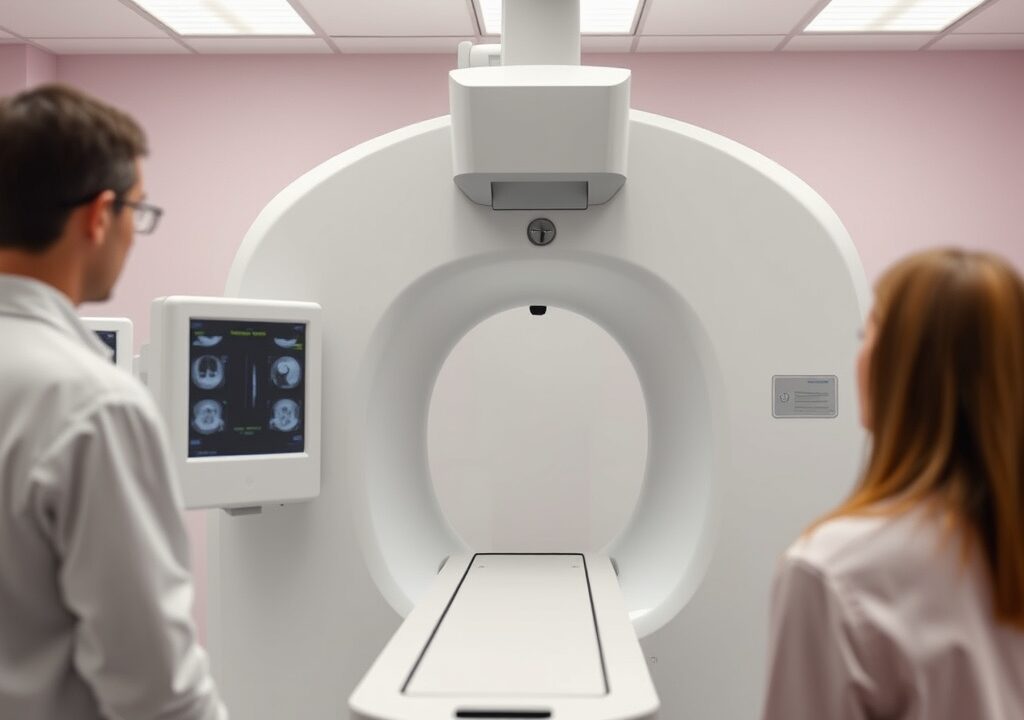
A routine mammogram is still first and foremost a breast-cancer screening test. But some scans can also show breast arterial calcification, often shortened to BAC, a finding that has drawn new attention because it may be linked with higher cardiovascular risk.
That idea is not new, but it is gaining visibility as some health systems and lawmakers move toward including BAC in mammogram reports. The evidence so far suggests BAC may help identify people who deserve a closer look at heart-health risk factors. It does not mean a person has heart disease, and it does not replace established cardiovascular screening or care.
What happened
Recent reporting highlighted a new Maryland requirement that mammography centers notify patients when their scans show BAC. According to the Washington Post’s account, Maryland is the first state to require that type of notification on routine mammograms, and the law took effect on October 1, 2026. The change reflects growing interest in whether a test already used widely for breast cancer screening can also surface clues about vascular health.
Researchers and cardiology groups have been discussing BAC for years. The calcifications can appear in the arteries within breast tissue and are generally considered a marker of vascular change rather than a breast-cancer finding. A review in Circulation from the American Heart Association said BAC may offer a noninvasive way to help stratify cardiovascular risk, while also noting that the practical next steps for patients are still being worked out.
Why it matters
Heart disease remains a major health threat, and it often develops silently for years. A clue that appears during an exam many people already get could, in theory, help clinicians identify risk earlier. That is one reason the BAC discussion has accelerated: it could turn an existing screening appointment into a chance to open a broader prevention conversation.
For patients, the main appeal is simple. If a mammogram already shows information that may be relevant to heart health, it could prompt follow-up that otherwise might not happen. That follow-up could include a discussion about blood pressure, cholesterol, diabetes, smoking, kidney disease, or other established risk factors.
What the evidence actually shows
The strongest support for BAC comes from observational studies and reviews of those studies, not from trials showing that acting on BAC improves outcomes. PubMed-indexed studies have linked BAC on mammography with coronary artery disease, coronary calcium, stroke, heart failure, and cardiovascular death in various populations. A more recent systematic review and meta-analysis reported that BAC is associated with increased cardiovascular events overall.
Those findings matter, but they should be read carefully. Association is not the same as proof that BAC causes heart disease, and it is not the same as proof that a BAC result changes outcomes when used in care. BAC may be best understood as a signal of underlying vascular aging or disease burden rather than a disease diagnosis by itself.
Not every study has found the same strength of relationship, and some earlier research was mixed. That inconsistency is one reason many experts describe BAC as promising but still evolving as a risk marker. In other words, the finding is real; the best way to use it in practice is still being refined.
What remains uncertain
Several key questions are still unanswered. There is no universal standard for how BAC should be reported in mammography results. It is also not clear whether every BAC finding should lead to the same next step, such as a primary-care visit, a lipid check, or a formal cardiovascular risk assessment.
Another open question is whether telling patients about BAC improves outcomes on its own. At least one recent report noted the lack of randomized evidence showing that a specific intervention after BAC detection reduces cardiovascular disease in a meaningful way. That matters because screening is only useful if it leads to better decisions and, ultimately, better health.
There is also the issue of who should act on the result. Radiologists can identify BAC on imaging, but the downstream interpretation usually belongs with the clinician who knows the patient’s overall risk profile. A person with BAC might already have well-managed cardiovascular risk, while another person with the same finding could have untreated high blood pressure or high cholesterol.
What to discuss with a clinician
If BAC appears on a mammogram report, it can be reasonable to ask what the finding means in context. The most useful conversation is usually not about the calcification alone, but about what it may suggest for overall cardiovascular prevention.
That discussion may include whether the patient is up to date on blood pressure checks, cholesterol testing, diabetes screening, and other routine preventive care. It may also be a chance to review lifestyle factors that affect heart risk, such as physical activity, smoking, diet, sleep, and weight management.
People should not assume that BAC requires an urgent response by itself. But if the mammogram result comes with chest pain, shortness of breath, fainting, or other possible heart-related symptoms, those symptoms warrant prompt medical attention. The mammogram finding is a screening clue, not a substitute for urgent evaluation when symptoms are concerning.
The bottom line
Breast arterial calcification is increasingly being recognized as more than a radiology footnote. The evidence suggests it can be a useful marker of cardiovascular risk, and new reporting rules may make it more visible to patients and clinicians.
Still, BAC is not a diagnosis, and it is not yet backed by the kind of clinical-trial evidence that would define exactly how every case should be managed. For now, the most practical value may be that it opens the door to a more complete look at heart-health risk during a test many people already receive.
Sources
- The Washington Post: Your next mammogram results could reveal BAC, a heart disease warning sign (2026-10-07)
- PubMed: A Review of the Role of Breast Arterial Calcification for Cardiovascular Risk Stratification in Women (2019-02-19)
- PubMed: Association Between Breast Arterial Calcifications and Cardiovascular Disease: A Systematic Review and Meta-analysis (2023-08-01)
- American Heart Association: Could mammograms screen for heart disease? (2019-12-02)
- PubMed: Breast arterial calcification on mammography and cardiovascular outcomes in women: A meta-analysis (2026-06-01)
