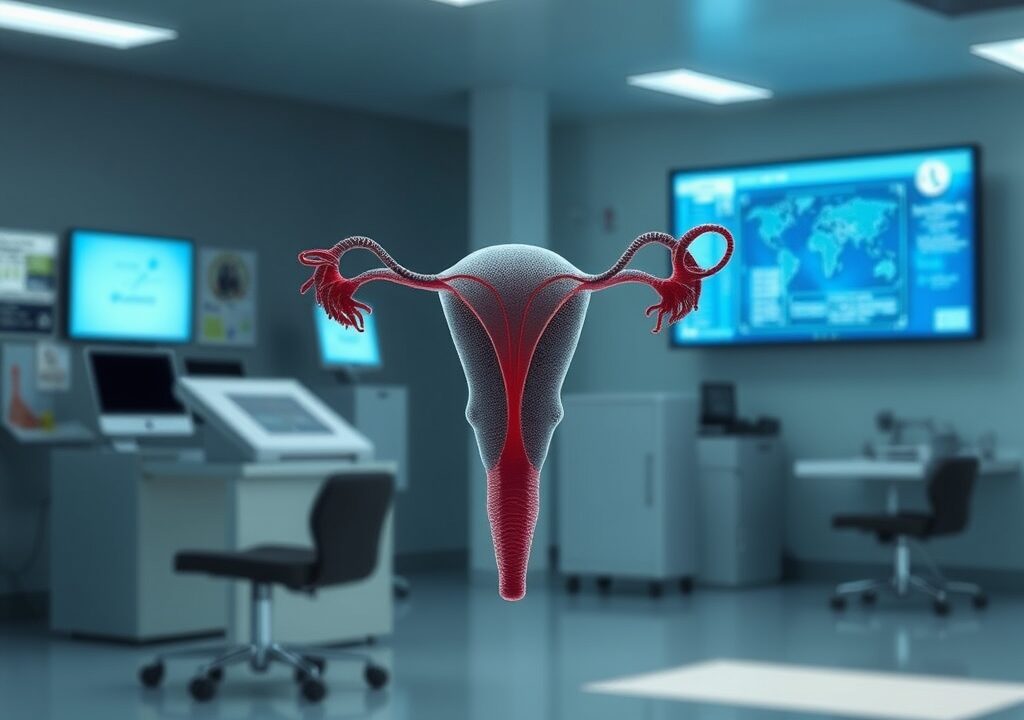
For years, menopause has been described as the point when the ovaries stop working. A new wave of research is challenging that simple picture. Scientists are finding that the postmenopausal ovary is not a dormant organ sitting out the rest of life, but a tissue that still changes in measurable ways and may continue to influence the body.
The latest work, reported in The Washington Post and published in Aging Cell, adds to a broader shift in menopause science: researchers are looking not only at the end of ovulation and fertility, but also at what the ovary continues to do afterward. That distinction matters because the ovary has long been linked to hormones that affect many tissues beyond the reproductive system.
What the new research is pointing to
The new study described in the reporting examined postmenopausal ovarian tissue and found signs that the organ remains active at a cellular and structural level. The important takeaway is not that the ovary resumes ovulation or reverses menopause. It is that the tissue appears to keep functioning in ways that may still matter for health.
This fits with other recent work showing that ovarian aging is a gradual biological process rather than a single switch flipping off at menopause. Earlier and newer studies alike have reported that the postmenopausal ovary can continue some endocrine activity, although the extent and importance of that activity vary and remain under study.
Why that matters for the rest of the body
The ovary has always been more than a source of eggs. It is part of a hormone network that communicates with the brain, bones, immune system, cardiovascular system, and other organs. Even after menstrual cycles end, the body does not simply become disconnected from ovarian biology.
That is why scientists are interested in whether postmenopausal ovarian tissue may still contribute to the very broad changes many people notice later in life, including shifts in metabolism, bone health, and symptoms sometimes discussed in the context of menopause. None of this means the ovary is solely responsible for those changes, and it would be a mistake to overstate what a single study proves. But it does suggest the organ may remain relevant longer than many people have assumed.
What the evidence actually shows
The strongest evidence so far supports a more careful statement: after menopause, the ovary does not become biologically silent. Multiple reviews and studies indexed in PubMed and NIH-hosted resources describe persistent, though altered, endocrine function in the postmenopausal ovary. Some research has found continuing production of certain steroids or hormone-related activity, while other studies show that these signals are reduced, inconsistent, or difficult to interpret.
That nuance matters. Observing continued activity in ovarian tissue does not prove that the ovary is causing any specific health outcome. It also does not prove that changing ovarian function after menopause would improve symptoms or prevent disease. At this stage, the science is best understood as mapping a still-evolving organ, not delivering a new treatment.
Another important point is that much of the newer evidence comes from tissue studies, single-cell analyses, and other laboratory approaches. These methods are powerful for identifying cellular patterns, but they do not always show how a finding plays out in real-world health outcomes over time. Human studies that track clinical effects are still needed.
What remains uncertain
Several questions are still open. Researchers do not yet know how much postmenopausal ovarian activity varies from person to person, which signals are most meaningful, or whether any of the changes seen in tissue have a direct effect on symptoms or long-term disease risk. It is also unclear which observations are part of normal aging and which may reflect individual differences, prior reproductive history, or other health factors.
Another uncertainty is clinical relevance. Even if the ovary continues some biological work after menopause, that does not automatically translate into a target for treatment. Scientists will need larger studies to determine whether these findings can help explain why some health risks rise after menopause, or whether they point toward new preventive strategies.
What this means in practical terms
For general readers, the immediate message is mostly conceptual: menopause is not the end of ovarian biology. The ovary appears to remain a living tissue that continues to age, remodel, and interact with the body in ways researchers are still trying to understand.
If you are experiencing symptoms that could be related to menopause, such as hot flashes, sleep disruption, vaginal dryness, or changes in mood, it is reasonable to bring them up with a clinician. Those symptoms are common, but they can also overlap with other medical issues. New ovarian research does not change the fact that persistent or severe symptoms deserve medical attention.
It is especially important to seek prompt care for postmenopausal bleeding, new pelvic pain, or a persistent change in abdominal fullness or urinary habits, since those symptoms can signal conditions that need evaluation. That advice is not specific to the new study; it is standard medical caution.
The bigger picture
The broader story here is that menopause research is moving beyond the old idea of a hard stop. The ovary may no longer support fertility, but it still appears to be part of a complex aging system. Understanding that system better could eventually improve how scientists think about menopause, ovarian cancer risk, and age-related health changes in the years after the last menstrual period.
For now, the key word is possible. The new study helps reinforce that the postmenopausal ovary is not simply “off.” It is still part of human biology, and researchers are only beginning to map what that means.
Sources
- The Washington Post: Why the ovary still matters well beyond menopause (2026-10-14)
- PubMed: Single-nucleus profiling reveals age-associated remodeling opposed by parity in the postmenopausal human ovary (2026-05-14)
- PubMed: Endocrine function of the postmenopausal ovary (2004-12-01)
- PubMed: Hormones and Aging: An Endocrine Society Scientific Statement (2022-01-01)
- PubMed: Menopause: Physiology, definitions, and symptoms (2024-01-01)
