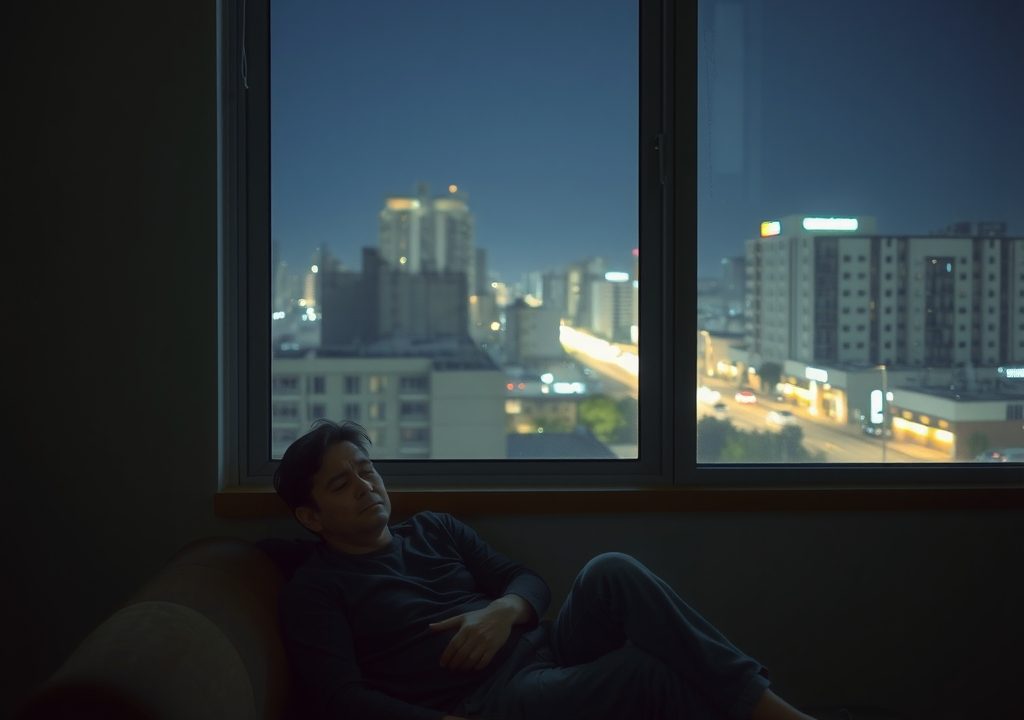
Sleep is often discussed as a matter of routines, screens, caffeine, or stress. But a growing body of research suggests that where people live and the resources available to them can also shape how well they sleep.
A recent U.S. study found that neighborhood deprivation was associated with several markers of poorer sleep and circadian health, including shorter sleep, longer sleep, later sleep timing, and higher social jet lag. Another recent analysis of national survey data found that income and other social determinants were linked with sleep duration among U.S. adults. Taken together, the findings add to evidence that sleep is influenced by social and environmental conditions, not just individual habits.
What the new research found
The study indexed in PubMed used data from a large U.S. cohort and examined neighborhood deprivation, which is a composite measure that can include poverty, income, employment, housing, and education. Researchers reported that people living in the most deprived neighborhoods had higher odds of short sleep and long sleep compared with those in the least deprived neighborhoods. The same study also found associations with poorer sleep quality, later sleep midpoint, and higher social jet lag, which refers to a mismatch between a person’s internal body clock and their daily schedule.
In a separate, newly published analysis of National Health and Nutrition Examination Survey data, researchers reported that poverty-income ratio and educational attainment were among the leading contributors to sleep duration patterns. That study reinforces the broader point that socioeconomic conditions are linked with how much people sleep.
Why this matters for health
Sleep is not a luxury. The Centers for Disease Control and Prevention says most adults need at least seven hours a night, and it notes that getting enough sleep and getting good-quality sleep are both important for health and well-being. The agency also warns that not getting enough sleep over time can worsen serious health problems and contribute to accidents and other harms.
That makes sleep an important public health issue, not just a personal habit. If income, housing conditions, noise, safety, shift work, commuting, or chronic stress make it harder to rest, people may be starting from a disadvantage before they ever try to improve their bedtime routine.
What the evidence does and does not prove
These studies add weight to the idea that neighborhood and financial conditions are linked with sleep health, but they do not prove that low income or neighborhood deprivation directly cause poor sleep in every person. Much of this research is observational, which means it can identify patterns and associations, not establish a simple cause-and-effect relationship.
That distinction matters. Poor sleep may be influenced by many connected factors at once: stress, work schedules, housing quality, light and noise exposure, mental health, transportation, and access to health care. The new findings are best read as evidence that sleep health reflects the environments people live in, not only the choices they make.
What may be driving the pattern
Researchers have long suspected that neighborhood disadvantage can affect sleep through several pathways. People in more strained environments may face more chronic stress, less predictable schedules, more noise, less green space, and fewer opportunities for stable routines. Financial pressure can also make it harder to protect sleep time, especially when work demands extend into evenings, overnight hours, or multiple jobs.
The newer studies do not settle which of these factors matters most. They do, however, support the idea that sleep health is embedded in social conditions. That may help explain why sleep problems often cluster with other health disparities.
What remains uncertain
Several questions remain open. The study of neighborhood deprivation points to associations, but it does not tell clinicians or policymakers exactly which neighborhood changes would most improve sleep. The survey-based analysis also cannot fully separate sleep effects from other overlapping social and medical factors.
More research is needed to clarify whether improving housing stability, neighborhood safety, environmental conditions, work schedules, or access to care leads to measurable sleep benefits. Researchers also still need to understand how these influences differ across communities and life circumstances.
What readers can take from this
For most people, the practical takeaway is not that sleep hygiene does not matter. It does. But the findings suggest that advice focused only on personal habits may miss larger barriers. A person who cannot sleep well may be dealing with conditions that are structural, not just behavioral.
If poor sleep is persistent, a clinician can help look for common medical contributors such as sleep apnea, insomnia, depression, anxiety, pain, medication effects, or circadian rhythm problems. The CDC advises people to talk with a health care provider if they have trouble sleeping. And if sleep loss is severe enough to affect safety, work, driving, or daily functioning, that is worth prompt medical attention.
Sleep health is still a personal matter, but this research is a reminder that it is also shaped by the places people live and the resources they can access. That makes it a useful lens for understanding health disparities — and a possible target for broader public health action.
Sources
- The Washington Post: Research shows how where someone lives and how much money they make can affect how well they sleep (2026-11-27)
- PubMed: The impact of neighborhood deprivation on sleep and circadian health in a large US cohort (2025-07-15)
- PubMed: Social determinants of health and sleep duration among U.S. adults: insights from NHANES 2005-2018 (2026-10-01)
- CDC: About Sleep (2024-05-15)
- CDC: About Sleep and Your Heart Health (2024-05-15)
Was this article helpful?
Thanks for your feedback — it helps us improve our coverage.
Get the Daily Health View briefing
The day's most important health news, explained clearly. One short email a day. Unsubscribe anytime.
