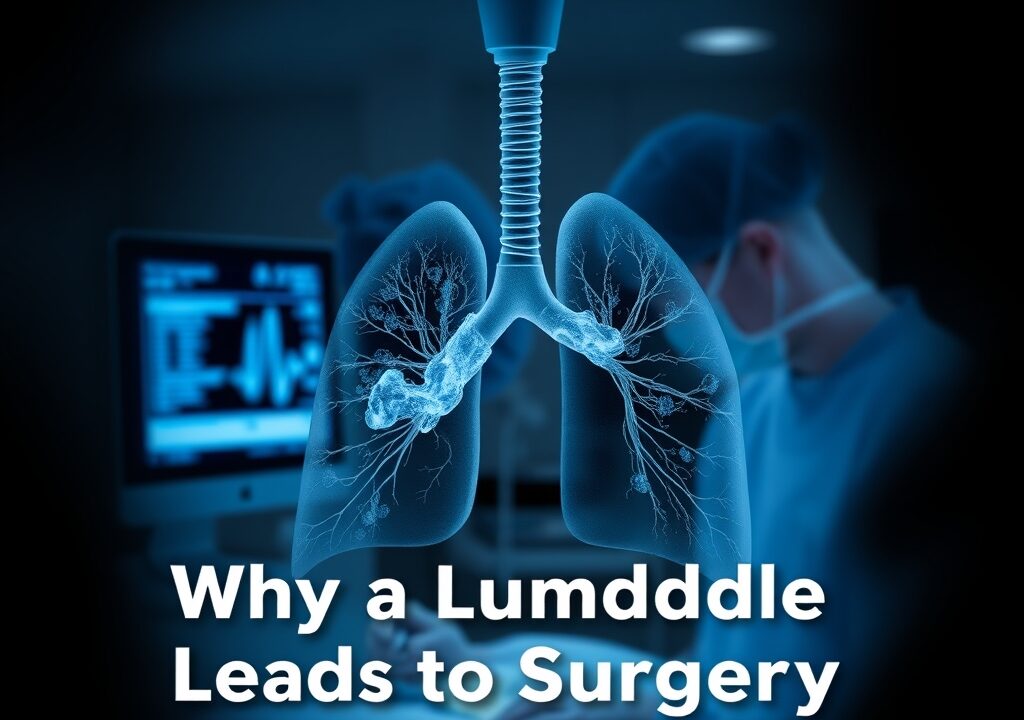
Pope Leo XIV is scheduled to have surgery in the coming days to remove a nodule from his lung, according to the Associated Press. The Vatican said the growth was found early, and the operation is intended to remove it and clarify what it is.
That kind of update can sound alarming, but a lung nodule is not a diagnosis by itself. A nodule may be benign or malignant, and doctors often decide between monitoring, biopsy, or surgical removal based on the nodule’s appearance, size, location, and the patient’s overall health.
What happened
The AP reported that the pope disclosed the planned operation on Sunday, saying it would take place in the coming days. Later AP reporting said the Vatican described him as active and in good form while he continued his regular schedule before the procedure.
In practical terms, that means the medical team has found a spot on the lung that they believe deserves removal or closer evaluation. The exact reason for surgery has not been fully detailed publicly, and the Vatican has not shared a pathology result or a final diagnosis.
Why a lung nodule matters
According to MedlinePlus, a solitary pulmonary nodule is a round or oval spot seen on a chest x-ray or CT scan. Some nodules are caused by infection, inflammation, or scar tissue. Others can represent cancer or a precancerous lesion.
That is why a nodule often triggers a stepwise workup instead of immediate assumptions. Small, smooth, stable nodules are less concerning than larger nodules, irregular nodules, or nodules that change over time. In many cases, clinicians watch the nodule with repeat imaging. In others, they recommend a biopsy or surgery to learn what the tissue is.
What the evidence actually shows
Medical references used by clinicians describe lung surgery as one way to remove a suspicious growth or obtain tissue for diagnosis. MedlinePlus notes that surgery may be used to remove tumors, including a solitary pulmonary nodule, and that lung needle biopsy may not always be feasible depending on where the nodule sits.
That does not mean every nodule is cancer. It means that when doctors cannot confidently classify the lesion from scans alone, removing it can provide a definitive answer. A published review in PubMed also describes follow-up imaging, biopsy, bronchoscopy, and video-assisted thoracoscopic surgery as options in managing small pulmonary nodules, depending on the clinical situation.
For readers, the key point is that surgery can be both treatment and diagnosis. A tissue sample can tell doctors whether a growth is benign, infectious, inflammatory, or cancerous.
What remains uncertain in this case
Several important details about Pope Leo XIV’s situation have not been made public. Officials have not said whether the nodule was found on an x-ray or CT scan, how large it is, whether it has changed over time, or whether the surgery is expected to be done with a minimally invasive approach.
It is also unknown whether doctors are removing the whole nodule for diagnosis, taking a sample, or treating a lesion they already believe is likely to be benign or early-stage disease. The word “nodule” can cover a broad range of findings, so the label alone does not reveal the final meaning.
Another uncertainty is the eventual pathology report. That is the document that will determine what the tissue actually shows. Until then, public discussion should be cautious and avoid assuming a cancer diagnosis that has not been confirmed.
How clinicians usually think about lung nodules
Medical guidance typically starts with risk assessment. Features that can make a nodule more concerning include growth, irregular borders, certain patterns on imaging, and a patient history that raises concern for malignancy. Features that can be reassuring include a small size, smooth edges, and stability over time.
When a biopsy is practical, it may be attempted with a needle or through a bronchoscope. When that is difficult or the nodule itself needs to be removed, surgeons may recommend a lung operation such as a wedge resection or another form of thoracic surgery.
That kind of decision is individualized. It depends not just on the image of the nodule, but also on whether the person can safely undergo anesthesia and surgery and whether removing the nodule is the best route to diagnosis.
What this means for readers
For the general public, this story is a reminder that an unexpected finding on lung imaging does not automatically mean cancer. It does, however, deserve attention. Many people first learn about a nodule when they are being evaluated for some other reason, and the next step is often more imaging, a specialist visit, or a procedure to get tissue.
If someone has been told they have a lung nodule, the most useful questions are usually straightforward: How big is it? Has it changed? What is the chance it is benign? Is a follow-up scan enough, or is biopsy or surgery recommended? What are the risks of waiting versus acting now?
People who already have symptoms such as coughing up blood, unexplained shortness of breath, chest pain, or a rapidly worsening cough should seek prompt medical attention rather than waiting for a routine appointment. Those symptoms do not prove a serious cause, but they should not be ignored.
For Pope Leo XIV, the public message so far is limited but clear: doctors plan to remove the nodule, and the procedure is expected to provide more information. The broader medical lesson is that, in lung care, surgery is sometimes the most direct way to answer an important question.
Sources
- Associated Press: Pope Leo XIV will have surgery in the coming days to remove a nodule on his lung (2026-10-11)
- Associated Press: What to know about Pope Leo’s planned lung nodule surgery (2026-10-12)
- MedlinePlus: Solitary pulmonary nodule (n/a)
- MedlinePlus: Lung surgery (n/a)
- PubMed: Managing the small pulmonary nodule discovered by CT (n/a)
