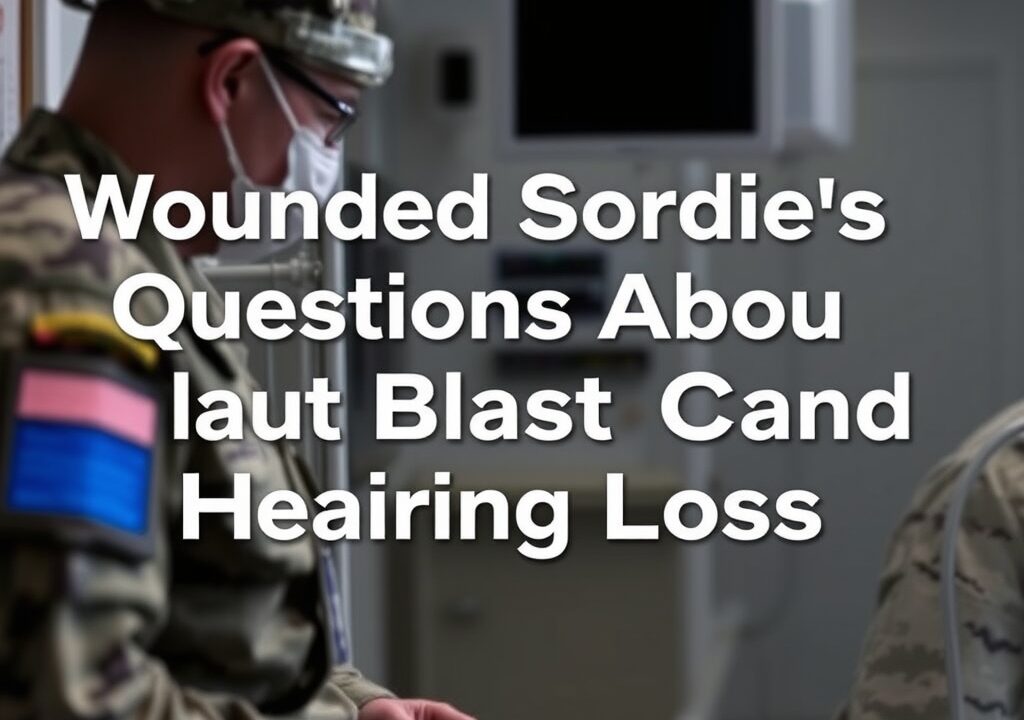
A recent Associated Press investigation says some U.S. service members wounded in an Iranian drone strike in Kuwait were left to navigate parts of their recovery on their own, with delays in diagnosis, transfers and follow-up care. Among the injuries described were head trauma and hearing loss, problems that can be missed when attention is first focused on more obvious wounds.
The reporting has broader public-health relevance because blast injuries can affect the ear, the brain and balance systems at the same time. Medical experts have long noted that an explosion can cause immediate and sometimes permanent hearing damage, including tinnitus, ruptured eardrums and sensorineural hearing loss.
What happened
According to the AP account published on October 5, 2026, six troops were killed and dozens were injured in the March 1 drone strike at Port Shuaiba in Kuwait. Several wounded soldiers told AP that the military system failed to recognize the seriousness of some injuries, did not always route them quickly to the right hospital care and left them dealing with paperwork and appointments during recovery.
The AP story says one soldier was told he had a traumatic brain injury after the blast ruptured his eardrum and left him briefly blinded. Another said he eventually received specialized treatment for head injury, hearing loss and smoke inhalation. The reporting also describes delays in MRI results, outpatient follow-up and problems with documentation after evacuation.
Why hearing problems can follow a blast
That pattern is medically plausible. The National Institute on Deafness and Other Communication Disorders says a single intense impulse sound, such as an explosion, can cause noise-induced hearing loss. The damage may be immediate and permanent, and loud noise exposure can also trigger tinnitus, the ringing, buzzing or roaring people sometimes notice after an injury.
NIDCD also notes that head and neck injuries can damage ear structures, the hearing nerve or brain areas that process sound. In practice, that means a person can have both a visible wound and a less visible ear or brain injury at the same time. A blast may damage the eardrum, the tiny bones of the middle ear, the inner ear hair cells or pathways in the brain that help interpret sound.
That is one reason hearing complaints after a blast should not be dismissed as minor, especially when they occur along with dizziness, confusion, headache or balance problems.
What the evidence actually shows
The AP report is a journalistic investigation, not a medical study. It does not prove how common these failures are across the military or how much each delay changed any individual outcome. But the reporting does fit a well-established medical picture: blast exposure is a recognized cause of ear injury, hearing loss and tinnitus, and those problems can be underdiagnosed if the initial evaluation is too narrow.
PubMed-indexed reviews on blast-related auditory injury describe several mechanisms of damage, including tympanic membrane perforation, hair-cell loss and other peripheral and central auditory effects. Those reviews also note that blast injuries can be complicated, with symptoms that range from obvious hearing loss to more subtle problems that emerge later.
That distinction matters. A soldier may walk away from an explosion with shrapnel wounds or a concussion and still have delayed or overlooked hearing problems. If the hearing loss is not identified early, follow-up care can be harder to coordinate, especially when the patient is moving between facilities.
What remains uncertain
Several important questions are still unresolved in the AP reporting. The military has said the care provided was appropriate, while soldiers and family members say the system failed them. The exact role of any coding, transfer or recordkeeping errors also remains unclear from the public reporting alone.
Another open question is the full medical trajectory for each wounded service member. Hearing loss after blast exposure can improve, persist or evolve over time depending on the type and severity of injury. Some symptoms may reflect temporary effects, while others may be signs of permanent damage.
It is also not possible from the AP report alone to separate hearing loss caused by the explosion from hearing loss caused by associated traumatic brain injury, head wounds or other injuries. In real-world blast trauma, those factors often overlap.
Why this matters beyond one strike
For readers, the case is a reminder that hearing problems are not just an inconvenience after trauma. They can affect communication, sleep, concentration, work performance and mental health. Tinnitus in particular can be persistent and distressing, and hearing loss can make it harder to follow conversations or notice other symptoms during recovery.
More broadly, the story raises questions about whether large systems are built to catch less obvious injuries quickly enough. When trauma care works well, it should identify both life-threatening wounds and injuries that may not be visible at first glance, including ear trauma and concussion-related problems.
What to discuss with a clinician after blast exposure
Anyone exposed to an explosion who notices muffled hearing, ringing in the ears, ear pain, dizziness, balance trouble, headache, confusion or drainage from the ear should be medically evaluated promptly. Those symptoms can signal more than a simple temporary reaction to noise.
For people recovering from blast trauma, follow-up often needs to include more than wound checks. Depending on symptoms, that can mean hearing testing, ear examination, neurologic assessment and coordination between primary care, audiology, otolaryngology and brain-injury specialists. Early attention does not guarantee full recovery, but it can help identify injuries that might otherwise be missed.
The AP reporting underscores a simple point: after a blast, the injuries that matter most are not always the ones that are easiest to see.
Sources
- AP News: Soldiers seriously wounded in Iranian drone strike tell AP the military’s medical system failed them (2026-10-05)
- NIH/NIDCD: Noise-Induced Hearing Loss (NIHL) (2026-10-05)
- NIH/NIDCD: What Is Tinnitus? — Causes and Treatment (2021-00-00)
- PubMed: Review of blast noise and the auditory system (2022-00-00)
