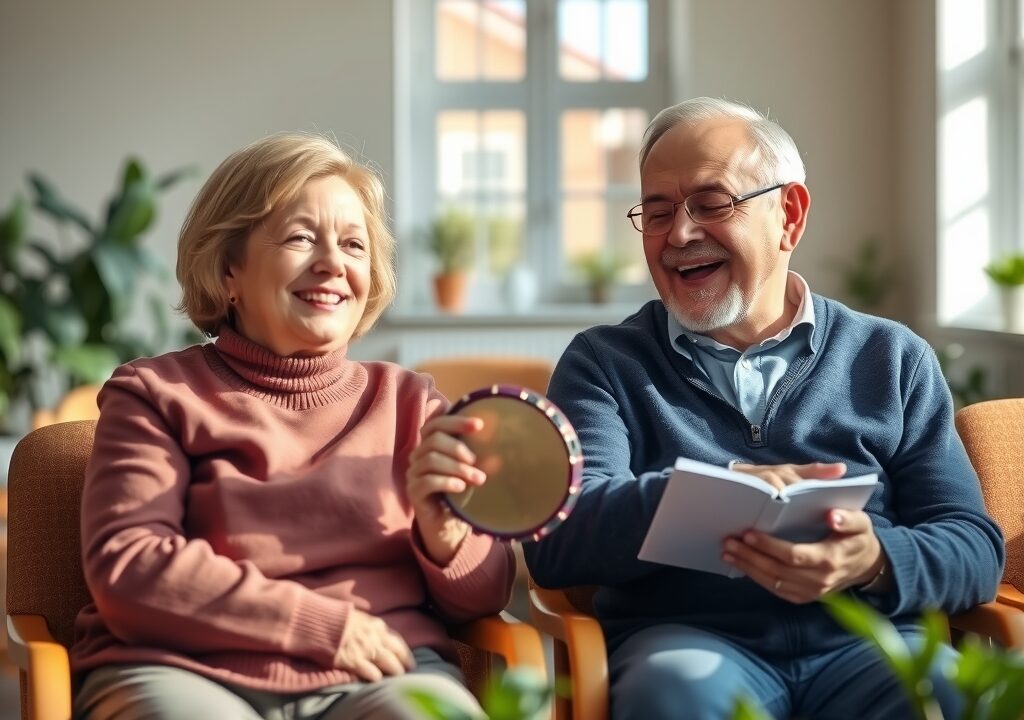
A new choir in Harlem is bringing together people living with dementia and the people who care for them, using familiar songs and group singing as a way to create connection, structure, and moments of enjoyment. The group, called The Unforgettables, is part performance project and part community support effort.
The idea fits with a growing body of dementia-care guidance that treats music not as a cure, but as one possible way to support mood, interaction, and quality of life. National Institute on Aging guidance includes music and singing among activities that may be meaningful for people living with Alzheimer’s disease, and federal researchers say arts participation can show promise for well-being and social engagement, even though more research is still needed.
What happened in Harlem
According to CBS News New York, the choir was formed through a partnership involving a local pastor, a state senator’s office, and the Alzheimer’s nonprofit CaringKind. The group rehearses weekly in Harlem and includes people living with memory loss as well as caregivers. The reported goal is simple: give participants a place to sing, connect, and enjoy an activity they can do together.
That setup matters because dementia can affect more than memory. It can also change communication, confidence, and day-to-day routines. A shared activity like singing may offer a low-pressure way to participate even when conversation is difficult. Music therapist Kendra Ray, quoted in the CBS report, described music as something many people can continue to respond to even as dementia progresses.
Why music may help
Music is often easier to hold onto than other kinds of information because it can tap into memory, rhythm, language, and emotion at the same time. The National Institute on Aging says that research on music and other arts has shown promise for improving quality of life and well-being, including memory, self-esteem, stress, and social interaction. The agency also notes that music and dance may help older adults with memory problems or dementia, but that more research is needed.
For caregivers, group music can add another benefit: a structured activity outside the usual care routine. The National Institute on Aging recommends music and dancing as one of several activities that can be enjoyable for a person with Alzheimer’s disease and can also create a shared experience for the caregiver and the person being cared for. That does not mean every program works the same way, but it does explain why community choirs are drawing interest.
In broader NIH materials, researchers have also reported that preferred music can reduce some disruptive behaviors in nursing home residents with dementia. That is an important distinction: the evidence supports symptom management and quality-of-life benefits in some settings, not a disease reversal or cure.
What the evidence actually shows
The strongest evidence for music in dementia care is not about making memory loss disappear. It is about improving how people feel and function in the moment. The National Institute on Aging says participatory arts such as music, theater, and dance show promise for better cognitive function, memory, stress reduction, and social interaction, but that additional research is needed before drawing broad conclusions.
NIA also notes that tailored music interventions have been studied in people with dementia living in nursing homes, where preferred music was associated with fewer verbally agitated behaviors in one NIH-funded trial. That kind of result is meaningful, but it is still a limited finding. It does not prove that a choir will work the same way for everyone, nor does it establish that music slows the underlying disease process.
The Harlem choir should therefore be understood as a supportive program, not a medical treatment. Its value may come from a mix of factors: familiar songs, repetition, social contact, caregiver support, and the sense of being part of something enjoyable and purposeful.
What remains uncertain
There are still open questions about which kinds of music activities help most, how often they should happen, and which participants benefit the most. Some people may respond strongly to familiar songs; others may prefer rhythm, movement, or simply listening. Individual preference matters.
Another uncertainty is durability. A single rehearsal or performance may lift mood in the moment, but researchers still need stronger studies to show whether community music programs produce lasting changes in quality of life, caregiver burden, or dementia-related behaviors over time. NIA’s own summary of the field emphasizes that more research is needed.
It is also important not to confuse creative support with medical care. Music may complement a care plan, but it should not replace evaluation, diagnosis, medication review, safety planning, or other dementia services when those are needed.
Practical context for families and caregivers
For readers who care for someone with dementia, the most useful takeaway may be that music can be easy to try and easy to adapt. A person does not need to sing in public to benefit from music. Options can include a community choir, at-home playlists, singing along to familiar songs, or attending a musical event with a trusted companion.
The National Institute on Aging suggests using music in ways that are familiar and comfortable, and it frames these activities as part of a broader approach to engagement rather than as a standalone remedy. That approach may be especially helpful when day-to-day conversation becomes difficult, because music can offer structure without requiring perfect recall or verbal fluency.
Families should also remember that dementia affects each person differently. A setting that feels uplifting to one person may feel overwhelming to another. If a loved one becomes confused, agitated, unusually sleepy, or suddenly worse in thinking or behavior, that change deserves medical attention, especially if it is abrupt. Sudden changes are not something to assume are just part of aging.
For many families, the promise of a choir like The Unforgettables is not that it changes the diagnosis. It is that it can change the hour. It offers a place where memory loss does not have to be the only thing in the room.
The bottom line
Community music programs are increasingly being used to support people living with dementia and the people who care for them. The evidence suggests music can support mood, social connection, and some behavioral symptoms, but it does not show that music cures dementia or replaces medical care. As a low-risk, person-centered activity, though, it may have a meaningful place in dementia support.
Sources
- CBS News: New Harlem choir uses music to help members with dementia (2026-10-23)
- CBS News New York: New Harlem choir uses music to help members with dementia (2026-10-23)
- National Institute on Aging: Adapting Activities for People With Alzheimer's Disease (2024-03-01)
- National Institute on Aging: Cognitive Health and Older Adults (2026-10-01)
- National Institute on Aging: What Do We Know About Healthy Aging? (2026-10-01)
- National Institute on Aging: Preventing and Treating Alzheimer’s Disease and Related Dementias (2024-10-01)
Was this article helpful?
Thanks for your feedback — it helps us improve our coverage.
Get the Daily Health View briefing
The day's most important health news, explained clearly. One short email a day. Unsubscribe anytime.
