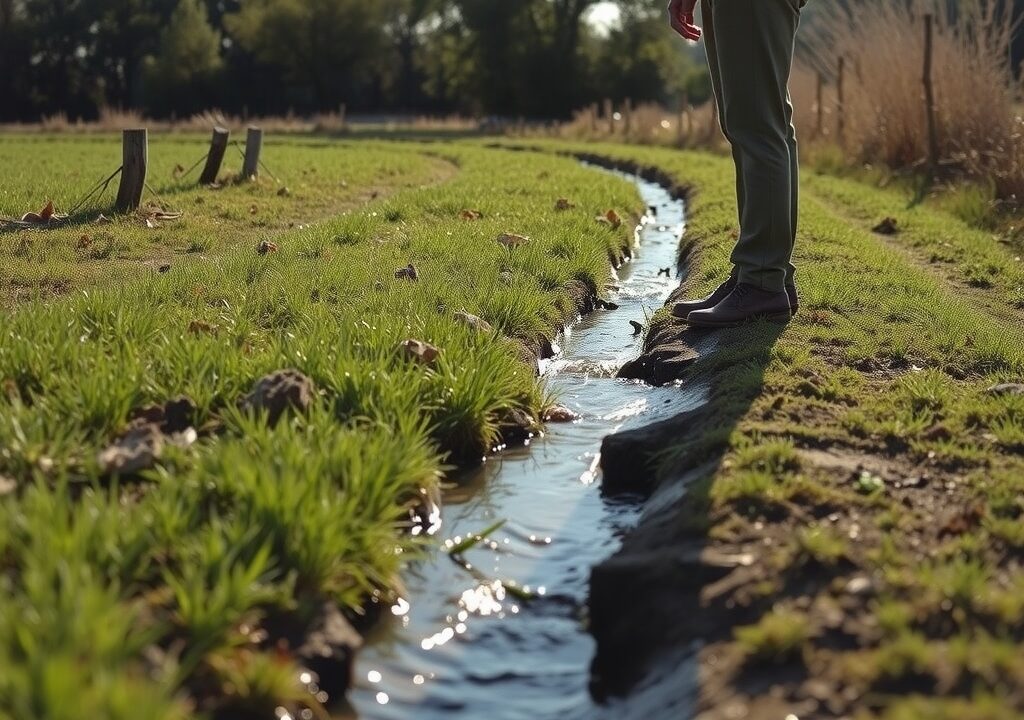
Iowa’s water quality debate has moved from a policy dispute to a campaign issue, with candidates in the state now talking openly about cancer rates, farm runoff, and the health effects of environmental exposures. The latest AP reporting describes how these concerns have shown up in debate questions, campaign events, and political ads as voters weigh broader questions about public health and agriculture.
That political shift reflects something many health experts have long emphasized: cancer is not caused by one factor alone, and environmental exposures are only one part of a much larger picture. Public-health agencies and research institutions say reducing exposure to harmful contaminants can help lower risk, but they also caution that links between specific exposures and specific cancers are often complex and hard to prove from observational data alone.
What happened in Iowa
According to AP’s reporting, water quality and cancer have become recurring themes in Iowa’s midterm campaigns. Candidates from both parties have been pressed on whether industrial agriculture runoff and other pollutants are affecting drinking water and public health. In some cases, those questions have become central to how candidates define themselves and their policy priorities.
The AP story also shows how the issue has become politically sensitive. Some candidates are using stronger language about pollution and cancer risk, while others are pushing back on the idea that agriculture is to blame for Iowa’s health problems. That tension has made the state a test case for how public-health concerns can shape electoral politics when people feel the effects in daily life.
Why the issue matters for health
Drinking water matters because it is one of the most basic environmental exposures people have. The CDC says contaminants can enter drinking water from natural sources, industrial activities, agricultural runoff, plumbing, and other pathways, and that protecting the water supply helps reduce the chance of contamination by germs or chemicals. The agency also notes that public water utilities must provide tap water that meets safety standards, while private wells are handled differently and may need separate testing and oversight. https://www.cdc.gov/drinking-water/causes/
For cancer prevention, the broad public-health message is not that every environmental exposure causes cancer, but that some exposures do raise risk and are worth reducing when possible. CDC guidance on cancer prevention says limiting behavioral and environmental risks can help reduce cancer cases and deaths. The National Cancer Institute likewise says environmental exposures are a legitimate research area, while noting that common risks such as tobacco use and infections account for a larger share of cancer burden than many environmental pollutants. https://www.cdc.gov/cdi/indicator-definitions/cancer.html
What the evidence actually shows
The strongest medical evidence in this area is usually about specific chemicals or exposure pathways, not about broad political claims. For example, the NCI’s prevention summary says highly concentrated inorganic arsenic in drinking water is causally associated with cancers of the skin, bladder, and lung. CDC materials also note that high levels of arsenic in drinking water have been associated with bladder cancer. https://www.ncbi.nlm.nih.gov/books/NBK66016.29/
That does not mean all water pollution causes cancer, or that any one state’s cancer rate can be traced to a single source. Cancer rates are influenced by smoking, alcohol use, infections, genetics, screening, access to care, occupational exposures, environmental contaminants, and many other factors. The CDC’s cancer guidance stresses that prevention works best when people reduce multiple risks at once rather than focusing on one supposed culprit. https://www.cdc.gov/tobacco/about/cigarettes-and-cancer.html/
In other words, the AP report is significant because it captures a real public-health concern, but the presence of a high cancer rate does not by itself prove a direct environmental cause. That distinction matters, especially when public debate moves faster than the evidence.
What remains uncertain
Environmental health research often relies on long-term observational studies, which can identify associations but do not always prove cause and effect. Researchers can see patterns in exposure and disease, but those patterns may also reflect other risks that are difficult to measure. NIH and NCI research programs continue to study how environmental exposures contribute to cancer risk, including agricultural exposures and water contaminants, because the science is still evolving. https://research.nih.gov/research/atniehs/labs/epi
That uncertainty is one reason public-health experts tend to focus on prevention and exposure reduction rather than waiting for perfect proof. Lowering contamination, improving monitoring, and making screening and treatment available are all part of the broader cancer-prevention picture. The CDC says cancer cases and deaths can be reduced by limiting behavioral and environmental risks and improving access to screening and treatment. https://www.cdc.gov/cdi/indicator-definitions/cancer.html
What people can take from this debate
For readers, the practical takeaway is not to panic, but to pay attention to local water information and public-health guidance. People who rely on private wells should know that those wells are not covered by the same rules as public drinking water systems and may need testing. The CDC advises well owners to check for local testing recommendations and to pay attention to water quality indicators that may signal a problem. https://www.cdc.gov/drinking-water/safety/guidelines-for-testing-well-water.html
If you have specific concerns about drinking water, cancer history, or possible exposure to contaminants, the most useful next step is usually to bring those questions to a clinician or local health department. A clinician can help sort out whether screening, testing, or other follow-up makes sense based on an individual’s situation.
And if anyone develops symptoms that could be urgent, such as blood in the urine, unexplained weight loss, persistent pain, or a new lump, that should be evaluated promptly. Most such symptoms do not mean cancer, but they should not be ignored.
The Iowa campaign debate underscores a broader point: environmental health is not just a regulatory issue. It is also a daily-life issue that affects how people think about safety, trust, and responsibility. The science may be nuanced, but the public concern is real.
Sources
- AP News: Iowa faces a reckoning over water quality and cancer rates in midterm campaigns (2026-10-14)
- CDC: What Causes Tap Water Contamination (2024-09-01)
- CDC: Cancer | Chronic Disease Indicators (2024-09-01)
- National Cancer Institute / NIH: Cancer Prevention Overview (PDQ®) (2022-01-01)
- National Cancer Institute / NIH: Request for Information on Environmental Exposures and Cancer Risk (2020-01-31)
- NIH / NIEHS: Epidemiology Branch (2026-10-01)
Was this article helpful?
Thanks for your feedback — it helps us improve our coverage.
Get the Daily Health View briefing
The day's most important health news, explained clearly. One short email a day. Unsubscribe anytime.
