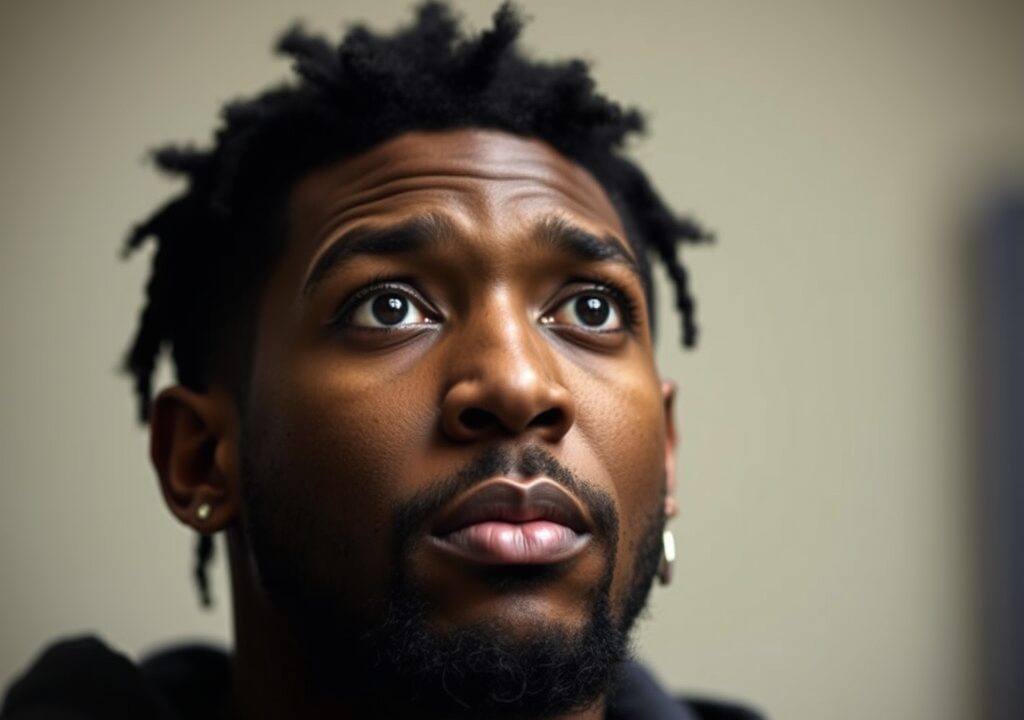
Karl-Anthony Towns used World Mental Health Day to speak publicly about a loss that has stayed with him for years: the death of his mother from complications of COVID-19. In comments made at a mental health festival in New York, the New York Knicks player described grief as an ongoing process rather than a short chapter that ends quickly.
The public setting mattered. His remarks came during a broader conversation about mental health support, therapy, and the pressure many people feel to keep emotional pain private. While his experience is personal, the underlying message is familiar to many families: grief can change how a person feels, thinks, and functions, and support can make that burden easier to carry.
What happened
According to the Associated Press report published on October 10, 2026, Towns spoke at a Project Healthy Minds event tied to World Mental Health Day and reflected on how his mother’s death in 2020 affected his relationship with basketball and with himself. He said talking with a trusted support person helped him feel less overwhelmed. The AP report also noted that the conversation was part of a larger festival focused on therapy access, emotional wellness, and reducing stigma around mental health care.
The story did not center on a treatment breakthrough or a clinical study. Instead, it highlighted a public figure describing grief in ordinary language and showing that even after success, loss can remain present. That framing is important because many people assume grief should follow a neat timeline. Health guidance from NIH and the National Institute on Aging says grief can be intense, physical, and emotionally disruptive, and there is no single correct way to move through it.
Why it matters for readers
Grief is not the same as a diagnosed mental illness, but it can still affect mental health, sleep, concentration, appetite, and day-to-day functioning. NIH materials note that people may feel sadness, anger, confusion, regret, yearning, or a mix of emotions, and that physical symptoms can accompany the emotional strain. That helps explain why a public conversation about grief belongs in a broader mental health discussion, especially on a day dedicated to awareness and support.
The story is also a reminder that seeking help is not a sign of weakness. The AP report described Towns’ experience as one in which conversation itself was helpful. That aligns with NIH and MedlinePlus guidance that grief counseling, support groups, and trusted social support can be useful for some people. Support does not erase loss, but it can help a person stay connected to life after a death.
What the evidence actually shows
Medical and public health sources are clear on a few basics. Grief after a death is a normal human response, and it can affect both emotional and physical well-being. The National Institute on Aging notes that grief may bring both mental and physical pain, and MedlinePlus says it may take a year or longer to work through strong feelings of grief after a major loss.
NIH News in Health also emphasizes that grief is not a straight line. Some people feel better with time and informal support from family, friends, or faith communities. Others may need counseling, especially if the loss leads to persistent distress or makes it hard to re-engage with work, relationships, or daily routines. Those distinctions matter because they help readers separate a normal reaction to loss from a more persistent condition that may need professional care.
There is also a clinical term, prolonged grief disorder, for grief that stays intense and disabling. The important point is not to self-diagnose, but to recognize when grief stops easing and starts interfering with life for a long time. That is where a clinician can help assess whether counseling, therapy, or another kind of support is appropriate.
What remains uncertain
Towns’ experience is meaningful, but it does not prove that any one coping method works the same way for everyone. Personal stories can reduce stigma and encourage help-seeking, yet they are not a substitute for clinical evidence. They also cannot predict who will recover through informal support alone and who will need more structured care.
More broadly, the AP story is not a study of grief outcomes, therapy effectiveness, or mental health treatment. It is a public account of one person’s loss and coping. Readers should be careful not to overread it as medical advice or as proof that talking with someone will resolve grief in every case. It can help, but the right type and intensity of support varies.
Practical context: when support may be worth discussing
For many people, grief can be handled with time, routine, and support from others. But it may be worth talking with a clinician if grief feels stuck, keeps worsening, or begins to interfere with work, sleep, eating, or relationships. MedlinePlus says to seek medical help if grief feels unmanageable, leads to heavy alcohol or drug use, or is accompanied by suicidal thoughts. In an emergency, call or text 988 in the United States, or call emergency services if there is immediate danger.
It can also help to mention grief at a routine appointment, even if you are unsure whether what you are feeling is “serious enough.” A primary care clinician, therapist, or grief counselor can help sort out whether the reaction is part of normal mourning, a sign of depression or anxiety, or something that would benefit from targeted support. The point is not to pathologize loss. It is to make room for care when grief is becoming too heavy to carry alone.
The larger takeaway
World Mental Health Day often highlights policy, access, and treatment gaps. This story adds a more personal reminder: grief is one of the many reasons mental health support matters. When public figures speak openly about loss, they can make it easier for others to recognize their own pain and seek help without embarrassment.
That may be the most useful part of the conversation. Grief is common, but it can still be isolating. Hearing someone describe it honestly can make the experience feel less hidden — and, for some readers, less alone.
Sources
- Associated Press: Knicks champion Karl-Anthony Towns opens up about grief for World Mental Health Day (2026-10-10)
- National Institute on Aging: Grief and mourning (2026-10-09)
- NIH News in Health: Navigating grief (2026-07-01)
- MedlinePlus: Grief (2024-06-01)
- CDC: Improve your emotional well-being (2024-06-01)
