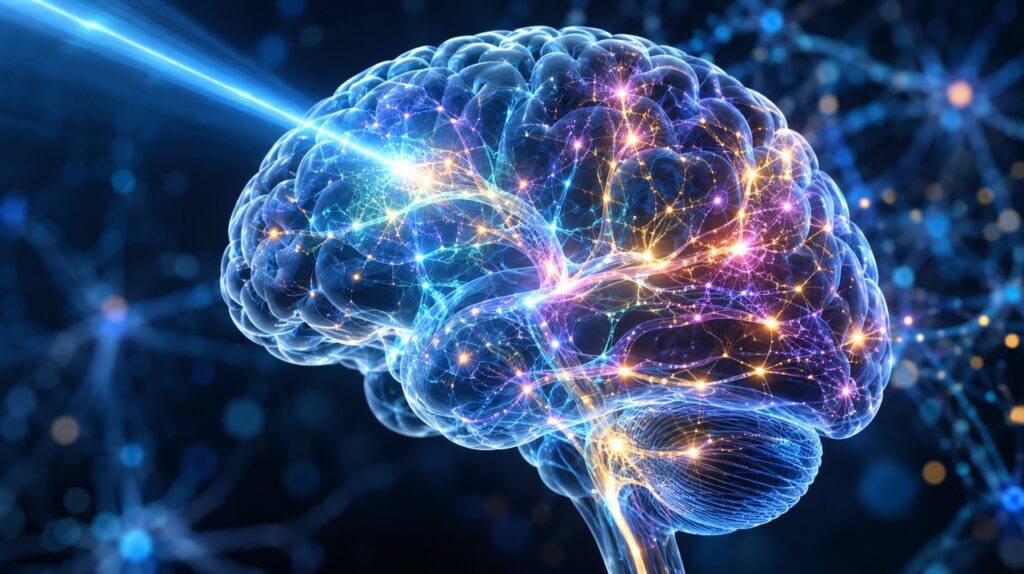
The 2026 Nobel Prize in physiology or medicine has put a decades-in-the-making brain science technique back in the spotlight: optogenetics. The award went to Karl Deisseroth of Stanford University and German researchers Peter Hegemann and Georg Nagel for discoveries involving light-gated ion channels and the development of optogenetics, a method that allows scientists to control nerve signals with light. News coverage of the prize highlighted the technique’s growing role in neuroscience and its relevance to conditions such as Alzheimer’s disease and Parkinson’s disease. ([washingtonpost.com](https://www.washingtonpost.com/health/2026/10/05/nobel-prize-medicine-awarded-3-scientists-optogenetics-work/?utm_source=openai))
For adults over 45, the story matters less as a laboratory novelty and more as a reminder that many age-related brain disorders are being studied at the level of circuits and cell types, not just symptoms. The National Institute on Aging says Alzheimer’s disease disrupts communication among neurons and later affects broad areas of the brain involved in memory, language, reasoning, and behavior. That makes tools that can isolate specific cells and pathways especially useful for understanding how the disease unfolds. ([nia.nih.gov](https://www.nia.nih.gov/health/what-happens-brain-alzheimers-disease/?utm_source=openai))

What happened
According to the Nobel announcement reported by The Washington Post and other outlets, the prize recognized work that showed how light-sensitive proteins can be used to make selected cells respond to light. In practical terms, that lets researchers activate or silence neurons with unusual precision. AP described the discovery as one that helped scientists learn how the brain works, while the Post noted that the committee emphasized light-gated ion channels as the basis for optogenetics. ([washingtonpost.com](https://www.washingtonpost.com/health/2026/10/05/nobel-prize-medicine-awarded-3-scientists-optogenetics-work/?utm_source=openai))
The basic breakthrough came from identifying microbial proteins that open or close when exposed to light. Once those proteins are placed in targeted neurons, researchers can use light pulses to alter activity in the cells they want to study. A review indexed in PubMed describes optogenetics as a way to control defined neural circuits with temporal and spatial precision, which is one reason the field quickly became central to modern systems neuroscience. ([pmc.ncbi.nlm.nih.gov](https://pmc.ncbi.nlm.nih.gov/articles/PMC6197853/?utm_source=openai))
Why it matters after 45
Most people will never undergo optogenetic treatment, and the technique is not routine clinical care. But the science behind it is helping researchers ask sharper questions about brain aging and disease. The NIA has said that neuroscience tools, including optogenetics, are part of efforts to develop and validate better models of Alzheimer’s disease and related dementias. In other words, this research may help scientists better understand which circuits go wrong, when they change, and why some cells are more vulnerable than others. ([nia.nih.gov](https://www.nia.nih.gov/research/milestones/research-resources/translational-capabilities-next-generation-animal-models?utm_source=openai))
That matters because Alzheimer’s disease is not just a matter of memory loss. NIA describes it as a disorder that damages neuron connections early, then spreads to broader networks that support everyday function. A tool that can isolate individual circuits may help researchers distinguish between a brain region that is damaged, a pathway that is compensating, and a downstream effect that follows later. For older adults and families watching for cognitive change, that distinction is important even if it does not yet translate into a direct therapy. ([nia.nih.gov](https://www.nia.nih.gov/health/what-happens-brain-alzheimers-disease/?utm_source=openai))
What the evidence actually shows
The strongest evidence for optogenetics remains in laboratory and animal research. Reviews in PubMed describe its use in mapping brain circuitry and in animal models of neurodegenerative disease, including Alzheimer’s disease, where it has been used to study memory impairment, inflammation, and plaque-related changes. NIA has also highlighted optogenetics in its Alzheimer’s research planning documents and workshop materials, underscoring that the technique is valuable for discovery science rather than as a proven human therapy. ([pubmed.ncbi.nlm.nih.gov](https://pubmed.ncbi.nlm.nih.gov/35197102/?utm_source=openai))
Some studies suggest optogenetic approaches can improve memory or reduce disease features in animals, but those findings should not be confused with a treatment ready for people. PubMed reviews describe promise in animal models, yet they also emphasize the need for more work on safety, delivery methods, and translation to humans. For readers, the most accurate takeaway is that optogenetics is a powerful research tool, not a cure for dementia or other brain diseases. ([pubmed.ncbi.nlm.nih.gov](https://pubmed.ncbi.nlm.nih.gov/35197102/?utm_source=openai))
What remains uncertain
Several major questions remain open. Researchers still need better ways to bring light-sensitive tools into human brain tissue safely and precisely, and any future therapeutic use would require devices, gene-delivery methods, and careful testing that do not damage tissue. A clinical-trial design review indexed in PubMed notes that optogenetics would require an implantable device capable of delivering optical stimulation without harming the brain. That is a very different challenge from using the method in a mouse or a dish. ([pmc.ncbi.nlm.nih.gov](https://pmc.ncbi.nlm.nih.gov/articles/PMC7611592/?utm_source=openai))
There is also a difference between understanding a disease mechanism and proving that changing one circuit changes the disease course in people. Optogenetics can reveal causation in carefully controlled experiments, but human brain disorders are influenced by many interacting factors, including age, vascular health, sleep, medications, and genetics. For that reason, promising circuit-level findings still need confirmation in human studies before they can guide routine care. ([nia.nih.gov](https://www.nia.nih.gov/health/what-happens-brain-alzheimers-disease/?utm_source=openai))
Practical context for adults 45 and older
For readers over 45, the practical value of this Nobel Prize is educational. It underscores how rapidly brain science is moving toward earlier, more precise understanding of disease. If you or a family member are concerned about memory loss, confusion, language changes, or difficulty with everyday tasks, the next step is not waiting for optogenetic therapies. It is to discuss symptoms with a clinician, because timely evaluation can help identify treatable causes and determine whether further cognitive workup is needed. ([nia.nih.gov](https://www.nia.nih.gov/health/what-happens-brain-alzheimers-disease/?utm_source=openai))
It is also worth remembering that not every memory complaint is dementia, and not every dementia symptom is Alzheimer’s disease. Brain health is affected by sleep, hearing, blood pressure, diabetes, medications, depression, and social isolation, among other factors. The new Nobel attention does not change that broader picture, but it does highlight why researchers keep focusing on the brain’s wiring: knowing which circuits are disrupted may eventually lead to better diagnosis and more targeted interventions. ([nia.nih.gov](https://www.nia.nih.gov/health/what-happens-brain-alzheimers-disease/?utm_source=openai))
In the meantime, the award is a reminder that some of the most important advances in medicine begin as basic science. Optogenetics started as a way to ask fundamental questions about neurons. It now serves as one of the most influential tools for studying how the aging brain works, how it changes in disease, and where future therapies may come from. ([pubmed.ncbi.nlm.nih.gov](https://pubmed.ncbi.nlm.nih.gov/21191368/?utm_source=openai))
Sources
- The Washington Post: Nobel Prize for medicine awarded to 3 scientists for optogenetics work (2026-10-05)
- AP News: Nobel medicine prize goes to 3 scientists for shining light on brain activity (2026-10-05)
- National Institute on Aging: What Happens to the Brain in Alzheimer’s Disease? (2026-10-01)
- PubMed: Optogenetics: implications for Alzheimer’s disease research and therapy (2022-03-01)
- PubMed: A history of optogenetics: the development of tools for controlling brain circuits with light (2011-08-01)

