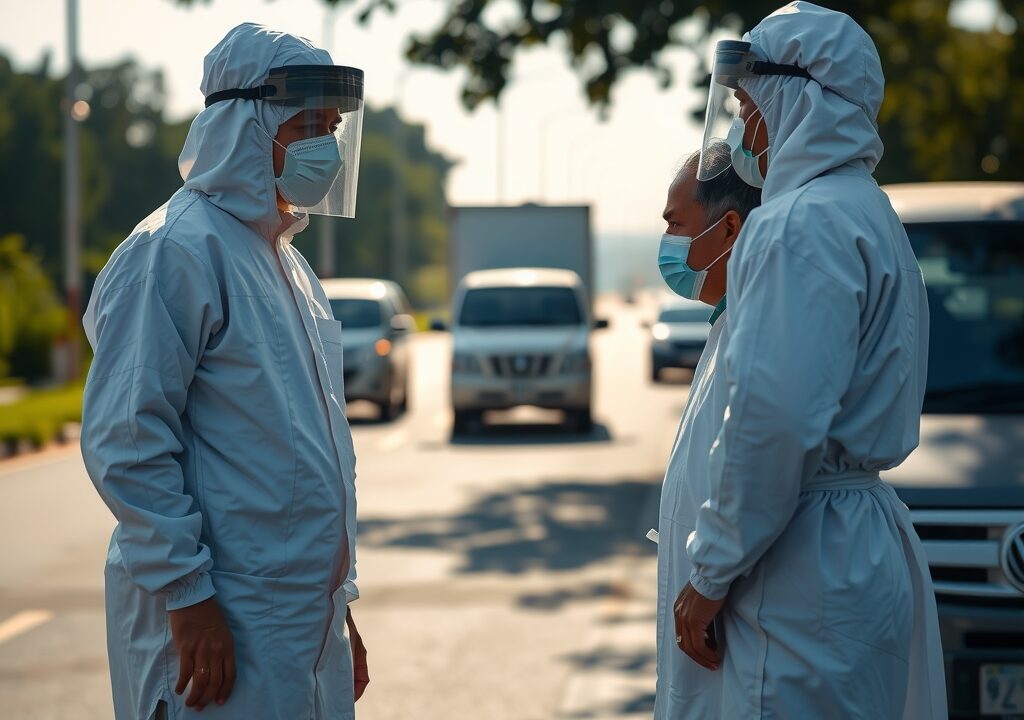
Kenya has reported a second Ebola death, deepening concern around a regional outbreak that health officials are still working to contain. The person who died was described by authorities as a close relative of Kenya’s first confirmed patient and developed symptoms while in quarantine, according to the Associated Press.
The new death does not by itself reveal how widely the virus may have spread, but it underscores how quickly Ebola can move through close contact networks once a case is identified. It also highlights why public health teams focus so heavily on isolation, contact tracing, and infection control in the days after an exposure is recognized.
What happened
Kenya’s Health Ministry said the second death involved a 65-year-old woman who was related to the first patient. AP reported that the first patient tested positive after arriving at a Nairobi hospital and died the same day. The later case emerged during quarantine, adding to the country’s tally of deaths as the outbreak response continued.
AP also reported that Kenya has recorded multiple cases linked to the same chain of transmission, including relatives of the first patient and health workers. That detail matters because Ebola outbreaks often intensify when transmission reaches caregivers or others who had close physical contact with a sick person before the illness is recognized.
Why this matters for outbreak control
Ebola is not spread casually through the air in ordinary community settings. It spreads through direct contact with the blood or body fluids of a person who is sick with Ebola, or through contaminated items such as needles, bedding, or medical equipment. People are not contagious before symptoms begin, which is why rapid identification and monitoring of contacts are central to response efforts.
That does not make Ebola easy to contain. Once symptoms start, the illness can worsen quickly, and households, clinics, and burial practices can become settings for further spread if infection prevention measures are not in place. CDC says symptoms can appear anywhere from 2 to 21 days after exposure, and the disease can become severe early in the course of illness.
Kenya’s report comes amid a larger regional response to Ebola activity in East and Central Africa. AP has reported that health authorities in multiple countries are tracking cases tied to travel through the region, and CDC has described the current outbreak response as difficult because of limited health infrastructure, limited access to testing, and other logistical challenges in affected areas.
What the evidence actually shows
The information now available supports a straightforward conclusion: Kenya’s outbreak response is being tested by close-quarters transmission and by the need to find contacts quickly. It does not yet prove how every case was introduced or whether all linked cases are known. AP noted that health officials are still piecing together the likely transmission path, and some infections in the region appear to be connected to travel history that is still under investigation.
CDC’s guidance helps explain why epidemiologists react quickly even when the number of cases is still relatively small. Ebola control relies on finding exposed people, monitoring them for the full 21-day incubation period, separating symptomatic patients from others, and using protective equipment in health care settings. Those steps are standard public health measures, but they become especially urgent when a disease can be fatal and may spread before a person reaches specialized care.
CDC also says the current outbreak in the Democratic Republic of the Congo is caused by Bundibugyo virus, a type of Ebola virus, and that the outbreak has faced major challenges because of limited health resources in the affected region. That context helps explain why neighboring countries are tightening surveillance and border-related precautions.
What remains uncertain
Several important questions remain open. Health officials still need to determine exactly how the first and second Kenyan cases fit into the broader transmission chain, how many contacts remain under observation, and whether additional infections will be detected in coming days. In outbreaks like this, the case count can change quickly as testing and tracing catch up with real-world spread.
It is also not yet clear whether all reported cases across the region share the same source or whether there have been multiple introductions. AP has reported that officials are investigating possible overlaps in travel history and exposure locations, but those links are still being assessed. Until the investigation is complete, it is best to avoid assuming that every case has the same origin or that the situation is fully mapped.
Another uncertainty is how many exposed people will remain asymptomatic through the full monitoring period. Because Ebola symptoms can take up to 21 days to appear, public health teams typically continue follow-up well after an initial case is confirmed.
What readers should know about symptoms and risk
For the general public, the most important message is that Ebola is serious but not spread by casual contact in normal day-to-day settings. Risk rises with direct exposure to body fluids, caregiving without protection, or contact with contaminated materials. That is why hospitals, clinics, and families caring for a sick person are the settings where precautions matter most.
CDC says common symptoms can include fever, fatigue, vomiting, diarrhea, loss of appetite, and, in some cases, bleeding later in the illness. Because these symptoms overlap with many other infections, recent travel history and known exposure are critical clues for clinicians.
Anyone who has had a possible exposure and then develops symptoms should seek urgent medical evaluation and mention the exposure right away. That guidance is especially important because rapid testing and isolation can protect both the patient and the people around them.
Practical context for families and clinicians
For families, the most useful steps are to follow local public health instructions, keep close watch on anyone listed as a contact, and avoid unsafe caregiving or burial practices if authorities provide different guidance. For clinicians, the key is to ask about travel, known exposure, and any contact with a confirmed or suspected Ebola case before routine care proceeds.
For the United States, CDC has said the current outbreak poses a low overall risk to the U.S. population, while noting that it is still monitoring the situation internationally and domestically. That does not mean the outbreak is unimportant; it means the public health system is working to reduce the chance that imported cases would lead to wider spread.
In the coming days, the most telling indicators will be whether tracing keeps pace with exposure, whether new cases appear among known contacts, and whether health systems can maintain isolation and safe care without delay. Those operational details, more than any single headline number, will determine whether the outbreak stays localized or continues to widen.
This article is for general information only and is not a substitute for medical advice. People with possible exposure or concerning symptoms should contact a clinician or local health authorities promptly.
Bottom line
Kenya’s second Ebola death signals that the outbreak response remains active and urgent. The core public health tools are well established—identify contacts, isolate cases, protect health workers, and monitor exposed people for 21 days—but success depends on speed, coordination, and trust.
Sources
Was this article helpful?
Thanks for your feedback — it helps us improve our coverage.
Get the Daily Health View briefing
The day's most important health news, explained clearly. One short email a day. Unsubscribe anytime.
