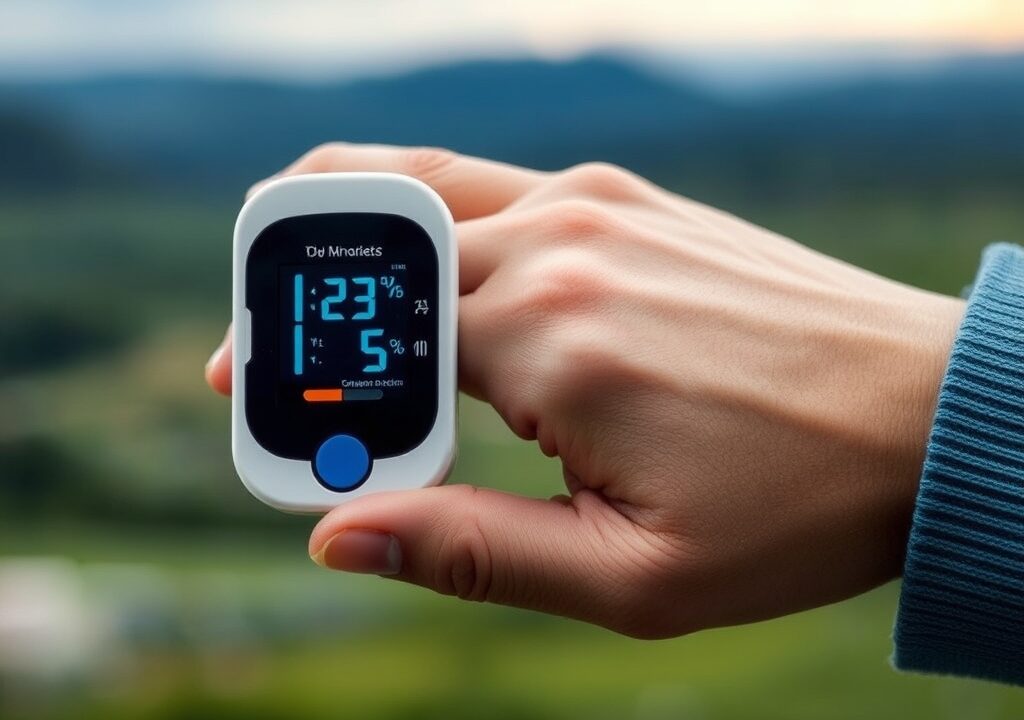
Pulse oximeters became a household health tool during the COVID-19 pandemic, but their limits have been debated for years. A new study from Johns Hopkins, published in the Annals of the American Thoracic Society, suggests the problem may be more complicated than a simple one-time accuracy gap. In this hospital, the devices’ readings changed over a five-year period: they tended to overestimate blood oxygen at first, then later began to underestimate it at higher oxygen levels. The errors were larger in patients of color. ([statnews.com](https://www.statnews.com/2026/10/06/pulse-oximeters-overestimate-and-underestimate-blood-oxygen-study/?utm_source=openai))
That matters for adults 45 and older, especially people living with chronic lung disease, heart disease, sleep apnea, or other conditions that may involve oxygen monitoring at home or in a clinic. Pulse oximeters are useful screening tools, but they are not perfect substitutes for more direct testing when oxygen levels are uncertain or symptoms do not match the number on the screen. The FDA says several factors can affect readings, including skin pigmentation, circulation, temperature, nail polish, and tobacco use. ([fda.gov](https://www.fda.gov/medical-devices/products-and-medical-procedures/pulse-oximeters?utm_source=openai))

What the Johns Hopkins study found
The STAT report described a retrospective analysis of five years of clinical data from Johns Hopkins Hospital. The research team compared pulse oximeter readings with arterial blood gas measurements, which are considered a more direct way to assess oxygenation. According to the PubMed abstract for the study, the mean error shifted from overestimation to underestimation by mid-2022. The abstract also says the accuracy of the tested medical-grade device varied year to year, which could complicate clinical decision-making. ([pubmed.ncbi.nlm.nih.gov](https://pubmed.ncbi.nlm.nih.gov/42768440/?utm_source=openai))
The findings do not prove that pulse oximeters themselves permanently changed in a universal way, and they do not identify a single cause. But they do suggest that device performance can vary over time in real-world hospital use, even for devices marketed as medical grade. The study was single-center and retrospective, so it cannot tell us exactly why the pattern changed. ([pubmed.ncbi.nlm.nih.gov](https://pubmed.ncbi.nlm.nih.gov/42768440/?utm_source=openai))
Why this matters more after 45
For many people in middle age and later life, oxygen numbers can influence when they call a clinician, when they go to urgent care, and whether a chronic condition seems stable. That includes people with COPD, asthma, heart failure, interstitial lung disease, long COVID symptoms, or sleep-related breathing problems. If a pulse oximeter reads too high, low oxygen may be missed. If it reads too low, people may worry unnecessarily or seek care sooner than needed. ([fda.gov](https://www.fda.gov/medical-devices/products-and-medical-procedures/pulse-oximeters?utm_source=openai))
The issue is especially important because the people most likely to use home monitors are often the same people most likely to have conditions that make oxygen tracking relevant. The FDA notes that accuracy concerns have been raised for people with darker skin pigmentation, and the agency has continued to update its recommendations and performance-testing guidance for these devices. ([fda.gov](https://www.fda.gov/medical-devices/products-and-medical-procedures/pulse-oximeters?utm_source=openai))
What the evidence actually shows
This new study adds to a larger body of research showing that pulse oximeters are not equally accurate for everyone. Earlier research and reviews have repeatedly found that these devices can overestimate oxygen saturation in people with darker skin tones, especially when oxygen levels are low. A 2022 review in Annals of the American Thoracic Society summarized that concern and explained that overestimation can lead to occult hypoxemia, meaning clinically important low oxygen that is not recognized right away. ([pubmed.ncbi.nlm.nih.gov](https://pubmed.ncbi.nlm.nih.gov/36166259/?utm_source=openai))
At the same time, not every study has found the same direction or size of error. Some older studies reported little or no effect from skin pigmentation, while more recent work has found measurable bias and broader device variability. That mixed literature is one reason experts and regulators continue to study the issue rather than treat pulse oximeters as uniformly reliable across all settings and users. ([pubmed.ncbi.nlm.nih.gov](https://pubmed.ncbi.nlm.nih.gov/9862586/?utm_source=openai))
The key point for readers is that pulse oximetry is best understood as an estimate, not a perfect truth meter. In hospitals, clinicians may compare the reading with the patient’s symptoms, vital signs, and, when needed, arterial blood gas testing. At home, the same principle applies: the device can be helpful, but it should not be the only thing guiding concern. ([fda.gov](https://www.fda.gov/medical-devices/products-and-medical-procedures/pulse-oximeters?utm_source=openai))
What remains uncertain
The Johns Hopkins study does not establish why the device error shifted from year to year. Possible explanations could include changes in device hardware, software, calibration, clinical workflow, patient mix, or other hospital conditions, but those are hypotheses rather than conclusions. The study also focused on one hospital and one device platform, so the pattern may not apply identically everywhere. ([pubmed.ncbi.nlm.nih.gov](https://pubmed.ncbi.nlm.nih.gov/42768440/?utm_source=openai))
Another open question is how well individual home pulse oximeters perform in older adults living with chronic illness. Consumer devices and clinical devices do not always behave the same way, and accuracy can be affected by practical factors such as poor circulation or cold fingers. That means a reading that looks reassuring in one moment may be less reliable in another. ([fda.gov](https://www.fda.gov/medical-devices/products-and-medical-procedures/pulse-oximeters?utm_source=openai))
Practical context for adults 45 and older
If you use a pulse oximeter because of a lung or heart condition, it can help to treat it as one piece of information rather than the whole picture. A number that is lower than expected should be rechecked after warming the hand, resting, and removing nail polish if possible. If the reading still seems off, or if you feel more short of breath, confused, weak, blue around the lips, or otherwise worse than usual, seek medical advice promptly. Those symptoms can matter even when the number is not dramatically low. ([fda.gov](https://www.fda.gov/medical-devices/products-and-medical-procedures/pulse-oximeters?utm_source=openai))
It is also reasonable to ask a clinician whether a home pulse oximeter is appropriate for your situation, whether your device has been validated for medical use, and what number should prompt a call or visit. For people with darker skin tones, it may be especially important to discuss how the device was chosen and how much trust to place in it. ([fda.gov](https://www.fda.gov/medical-devices/products-and-medical-procedures/pulse-oximeters?utm_source=openai))
For now, the new research is a reminder that even familiar medical tools can have shifting performance over time. For adults managing chronic disease, the safest approach is to use pulse oximetry as a guide — but not as the final word. ([pubmed.ncbi.nlm.nih.gov](https://pubmed.ncbi.nlm.nih.gov/42768440/?utm_source=openai))
Sources
- STAT: In this hospital, pulse oximeters went from overestimating to underestimating blood oxygen. Why? (2026-10-06)
- PubMed: Performance Inconsistency of Pulse Oximeters Over Five Years of Clinical Use: A Single-Center Study of Masimo Devices (2026-09-21)
- FDA: Pulse Oximeters (2025-01-07)
- FDA: Pulse Oximeters for Medical Purposes – Non-Clinical and Clinical Performance Testing, Labeling, and Premarket Submission Recommendations (2025-01-07)
- PubMed: Racial Disparity in Oxygen Saturation Measurements by Pulse Oximetry: Evidence and Implications (2022-12-01)
- PubMed: Clinical Outcomes Associated With Overestimation of Oxygen Saturation by Pulse Oximetry in Patients Hospitalized With COVID-19 (2023-08-15)

