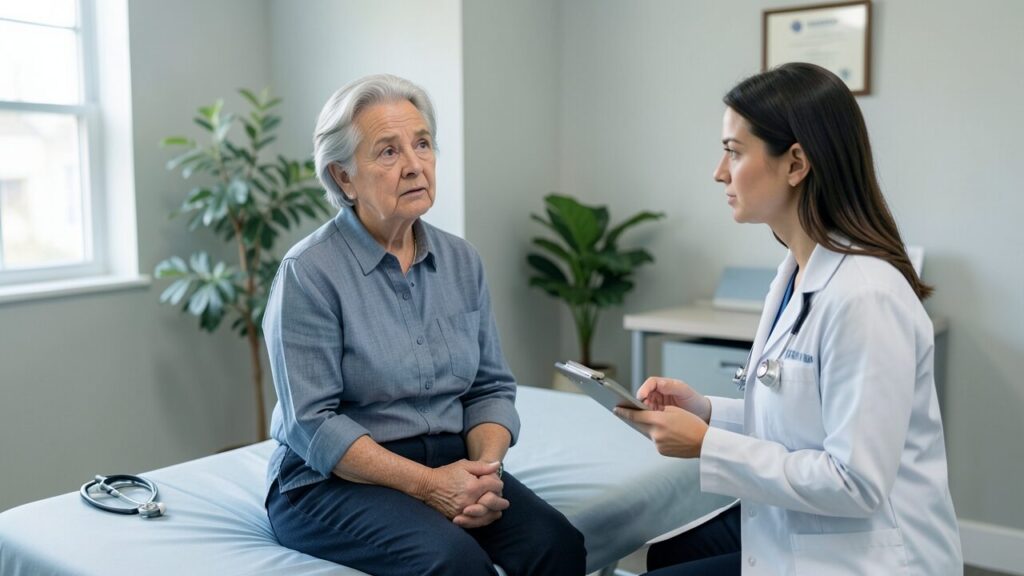
It is easy to dismiss poor concentration, forgetfulness, or morning grogginess as part of getting older. But for some adults, especially after age 45, those changes can also be a clue to obstructive sleep apnea, a common breathing disorder that disrupts sleep and can affect thinking, mood, and cardiovascular health. Recent reporting in The Washington Post highlighted how this condition may be missed when daytime sleepiness is mild or absent, particularly in older adults. ([washingtonpost.com](https://www.washingtonpost.com/wellness/2026/10/02/this-common-sleep-disorder-can-be-mistaken-cognitive-decline/?utm_source=openai))
That matters because older adults are more likely to have sleep problems in general, and sleep apnea becomes more common with age. The National Institute on Aging notes that sleep disorders, including sleep apnea, are more common in older adults, and that trouble with memory can also be part of normal aging or a sign of a medical issue that deserves attention. ([nia.nih.gov](https://www.nia.nih.gov/health/sleep/sleep-and-older-adults?utm_source=openai))

What the news story adds
The Washington Post piece focused on a familiar but underrecognized pattern: obstructive sleep apnea does not always present as obvious daytime sleepiness. In older adults, symptoms may be subtler and can include fogginess, concentration problems, and memory complaints that are easy to mistake for aging or cognitive decline. A 2026 review in Sleep Medicine Reviews found that in older populations, daytime sleepiness may be less prominent even when apnea is clinically significant. ([washingtonpost.com](https://www.washingtonpost.com/wellness/2026/10/02/this-common-sleep-disorder-can-be-mistaken-cognitive-decline/?utm_source=openai))
That is important because sleep apnea is not just a noisy-sleep problem. The condition involves repeated breathing interruptions during sleep, which can fragment rest and lower oxygen levels. The American Heart Association says obstructive sleep apnea is linked with problems in concentration and memory and is associated with higher rates of high blood pressure, stroke, and coronary artery disease. ([heart.org](https://www.heart.org/en/health-topics/sleep-disorders/sleep-apnea-and-heart-disease-stroke?utm_source=openai))
Why it matters after 45
Middle age is often when sleep apnea becomes more noticeable, particularly for people who have gained weight, developed high blood pressure, or entered menopause. In later life, the picture can become less obvious because older adults may not feel dramatically sleepy during the day even when their sleep is repeatedly interrupted. Reviews of older-adult sleep apnea consistently note that reduced sleepiness can delay diagnosis. ([pubmed.ncbi.nlm.nih.gov](https://pubmed.ncbi.nlm.nih.gov/39768640/?utm_source=openai))
That diagnostic lag matters because poor sleep can affect day-to-day function. The CDC says sleep supports attention and memory, and the National Institute on Aging notes that sleep problems can be linked to memory issues. For adults who are still working, caregiving, or managing multiple chronic conditions, even modest changes in attention or processing speed can have practical consequences. ([cdc.gov](https://cdc.gov/sleep/about/index.html?utm_source=openai))
What the evidence actually shows
Research supports a link between obstructive sleep apnea and measurable problems in attention, memory, and executive function, although the size of the effect varies and not every study finds the same pattern. PubMed-indexed reviews describe sleep disruption and intermittent low oxygen as likely contributors to these cognitive effects. ([pubmed.ncbi.nlm.nih.gov](https://pubmed.ncbi.nlm.nih.gov/28760549/?utm_source=openai))
There is also a long-running association between sleep apnea and blood pressure. Reviews in PubMed and guidance from the American Heart Association describe obstructive sleep apnea as tied to elevated blood pressure and cardiovascular risk, though the degree to which treating apnea lowers those risks can vary by patient and study design. ([pubmed.ncbi.nlm.nih.gov](https://pubmed.ncbi.nlm.nih.gov/33414503/?utm_source=openai))
On the brain-health side, the evidence is suggestive but not definitive. The American Heart Association’s scientific statement says sleep disorders, including sleep apnea, are associated with poorer brain health and cognitive outcomes, and NIH materials note that poor sleep and sleep-disordered breathing have been linked in studies to later cognitive decline and dementia risk. That does not prove sleep apnea causes dementia in every case, but it does support taking persistent symptoms seriously. ([professional.heart.org](https://professional.heart.org/en/science-news/impact-of-sleep-disorders-and-disturbed-sleep-on-brain-health?utm_source=openai))
What remains uncertain
Several important questions are still unsettled. The strongest data linking sleep apnea to cognitive decline are largely observational, which means they can show association but not proof of cause and effect. The 2026 Sleep Medicine Reviews paper on aging and sleep apnea explicitly notes that the evidence base in older adults is limited, heterogeneous, and often underpowered. ([pubmed.ncbi.nlm.nih.gov](https://pubmed.ncbi.nlm.nih.gov/41666824/?utm_source=openai))
It is also not yet clear how much treating sleep apnea changes long-term dementia risk. Some studies suggest potential cognitive benefits from continuous positive airway pressure, while others show modest or inconsistent results, especially in older adults where adherence and comorbidities complicate treatment. A meta-analysis in elderly patients found that CPAP can improve some outcomes, but broader neurocognitive effects remain variable across studies. ([pubmed.ncbi.nlm.nih.gov](https://pubmed.ncbi.nlm.nih.gov/32289311/?utm_source=openai))
What to discuss with a clinician
Adults 45 and older do not need to diagnose themselves, but persistent symptoms are worth bringing up. Loud snoring, gasping during sleep, witnessed pauses in breathing, waking unrefreshed, morning headaches, or ongoing trouble with memory and focus can all be reasons to ask whether sleep apnea should be evaluated. The NIA and MedlinePlus both note that a sleep study is a standard way to confirm the diagnosis. ([medlineplus.gov](https://medlineplus.gov/ency/article/000811.htm?utm_source=openai))
It is especially reasonable to raise the issue if sleep problems come with high blood pressure, cardiovascular disease, diabetes, or unexplained daytime fatigue. The CDC and NIH resources emphasize that untreated sleep apnea is associated with several health risks, including hypertension and stroke. ([nia.nih.gov](https://www.nia.nih.gov/sites/default/files/d7/brainhealthkeyfactsresources.pdf?utm_source=openai))
One caution: not every memory lapse means sleep apnea, and not every case of sleep apnea causes obvious sleepiness. But if the brain feels foggy in a way that is new, persistent, or affecting daily life, it is worth discussing with a clinician rather than assuming it is just normal aging. If symptoms include severe shortness of breath, chest pain, or sudden confusion, seek urgent care. ([nia.nih.gov](https://www.nia.nih.gov/health/memory-loss-and-forgetfulness?utm_source=openai))
For readers over 45, the practical takeaway is simple: sleep quality deserves the same attention as blood pressure, blood sugar, and exercise. When breathing interruptions during sleep are identified and managed, people may not just sleep better — they may also gain a clearer sense of what is aging, what is treatable, and what should not be ignored. ([newsroom.heart.org](https://newsroom.heart.org/news/sleep-matters-duration-timing-quality-and-more-may-affect-cardiovascular-disease-risk?utm_source=openai))
Sources
- The Washington Post: This common sleep disorder can be mistaken for cognitive decline (2026-10-02)
- National Institute on Aging: Sleep and Older Adults
- American Heart Association: Sleep Apnea and Heart Health (2023-06-26)
- PubMed: OSA in the aging population: Diagnostic and therapeutic considerations (2026-04-01)
- CDC: About Sleep
- National Institute on Aging: Memory loss and forgetfulness

