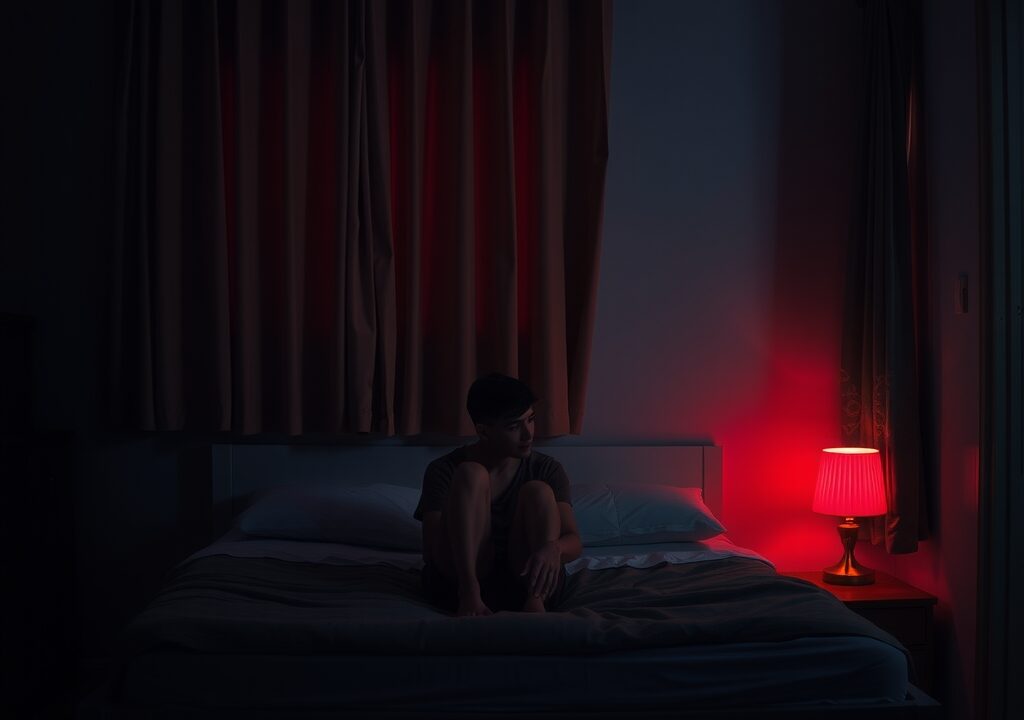
Red light is getting a lot of attention as a nighttime wellness tool, especially among people looking for better sleep. The basic idea is simple: if bright, blue-heavy light can keep the brain alert, then a warmer red glow might be easier on the body’s sleep-wake system.
The science behind that idea is real, but the conclusion is more cautious. Light does affect circadian rhythms, and evening light exposure can make it harder to fall asleep. However, red light has not been established as a stand-alone treatment for insomnia, and the research so far does not show that it reliably fixes sleep problems.
What the latest coverage is pointing to
Recent reporting has focused on whether red light devices, bulbs, or lamps can help people wind down at night. That interest fits with a broader question sleep researchers have studied for years: how different kinds of light influence the body’s internal clock. Current explanations are consistent on one main point: evening light matters, but not all light appears to affect the brain in the same way.
Public-health guidance from the CDC and sleep research summarized by NIH-linked sources show that light exposure late in the day can shift circadian timing and make sleep harder to start. Bright light before bed is generally discouraged, while reducing light in the evening is a common sleep-hygiene recommendation.
Why light color matters
Sleep is regulated partly by circadian rhythms, which help coordinate alertness, body temperature, and hormone release across the day. Light is one of the most powerful signals for that system. The eye contains light-sensitive cells that are especially responsive to shorter wavelengths, which helps explain why blue-rich light from phones, tablets, and bright indoor lighting can be especially stimulating at night.
By contrast, red light is farther from that blue range and may be less disruptive to melatonin timing. That does not mean red light is inherently sleep-inducing. It means it may be less likely than bright white or blue-heavy light to send a strong “stay awake” signal close to bedtime.
What the evidence actually shows
There is a difference between a plausible mechanism and a proven therapy. Human studies have consistently shown that light before bedtime can suppress melatonin or delay the body clock, while reducing evening light can support sleep onset. A randomized crossover study published in 2026 found that different pre-bed lighting conditions affected sleep latency in healthy adults, though the findings were modest and did not turn red light into a cure for insomnia.
Other recent studies and reviews also suggest that light at night is associated with sleep disturbance, but association is not the same as proof of cause. In other words, people exposed to more nighttime light may sleep worse, but that does not prove that one color of light alone will solve an underlying sleep disorder.
The strongest practical takeaway from the evidence is not that red light is magic. It is that dimmer, warmer, less stimulating lighting in the evening may be easier on sleep than bright overhead bulbs or a glowing phone screen.
What remains uncertain
Several important questions are still unsettled. First, studies on red light and sleep are relatively small compared with the long history of research on light exposure in general. Second, products sold as “red light therapy” vary widely in wavelength, brightness, timing, and design, so not all red light devices are comparable. Third, even when people report sleeping better, that does not always match objective sleep measures such as total sleep time or sleep fragmentation.
Researchers also have not established whether red light helps because of the color itself, because it replaces harsher light, or because it is part of a calming bedtime routine. Those differences matter, because they affect how confidently the findings can be applied to real-world sleep problems.
There is also a wider context: sleep problems often have multiple causes, including stress, irregular schedules, caffeine, alcohol, pain, medications, sleep apnea, restless legs, and anxiety. Light is only one piece of the puzzle.
Practical context for everyday sleep habits
For most people, the most evidence-based step is to reduce stimulating light before bed rather than chase a special device. That can include dimming household lights in the evening, lowering screen brightness, using night mode settings, and avoiding bright overhead lighting close to bedtime.
If you want to try red light, the safest way to think about it is as a comfort measure, not a treatment. A red or amber lamp may be useful if it helps you keep lighting low while reading, moving around the house, or getting ready for bed. But it should not replace medical evaluation if sleep problems are persistent.
People with ongoing insomnia symptoms, frequent nighttime awakenings, loud snoring, witnessed breathing pauses, or daytime sleepiness should talk with a clinician. Those can be signs of a sleep disorder that needs assessment rather than a lighting change. If sleep trouble is short-lived and clearly linked to stress or schedule changes, better sleep habits may be enough to help.
The bottom line
Red light is not a miracle solution, but it may be less disruptive than brighter, bluer light at night. The current evidence supports a more modest conclusion: keeping evening light dim and warm can help protect sleep, while red light may be a reasonable part of that strategy. What it does not do, at least based on current research, is guarantee better sleep or cure insomnia.
Sources
- NBC News: Can Red Light Really Help You Sleep? Experts Explain the Science (2026-10-29)
- CDC: Effects of Light on Circadian Rhythms (2018-01-01)
- CDC: About Sleep (2024-01-01)
- PubMed: Effect of Light Exposure Before Bedtime on Polysomnography and Sleep Quality: A Randomized Crossover Study (2026-03-01)
- PubMed: The effect of exposure to artificial light at night (ALAN) on sleep disturbance: a systematic review and meta-analysis (2026-01-01)
- PubMed: Exposure to room light before bedtime suppresses melatonin onset and shortens melatonin duration in humans (2010-01-01)
Was this article helpful?
Thanks for your feedback — it helps us improve our coverage.
Get the Daily Health View briefing
The day's most important health news, explained clearly. One short email a day. Unsubscribe anytime.
