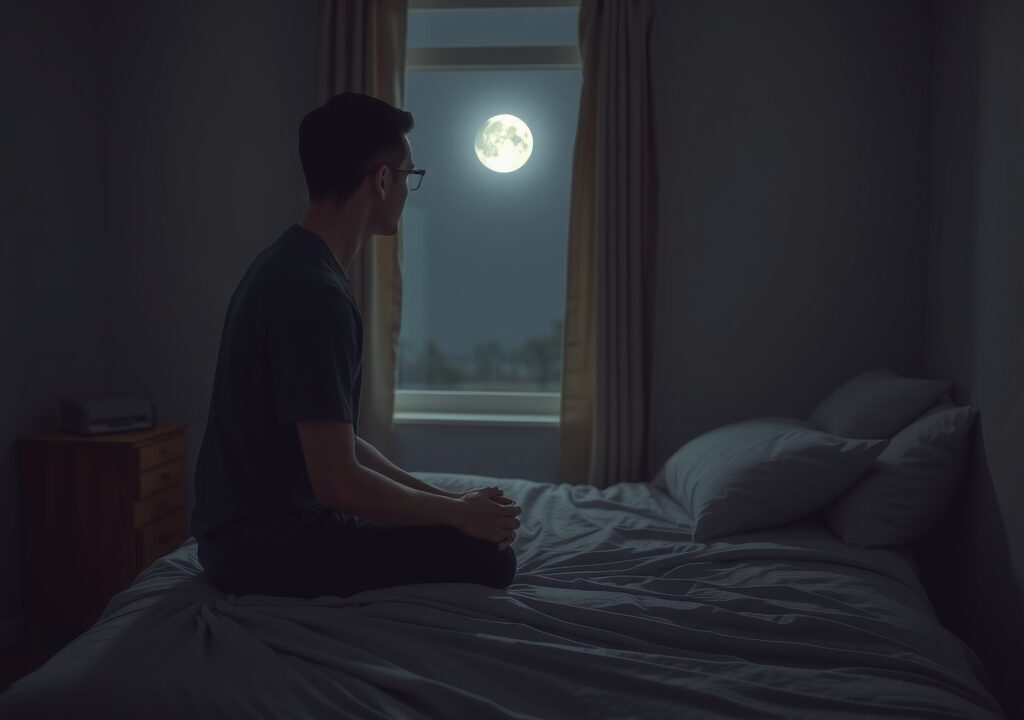
For many people, the hardest thoughts arrive right as the house gets quiet. Worries that seemed manageable during the day can feel more intense at bedtime, when there is less to distract the mind and more pressure to fall asleep. That pattern is common, and it can turn into a frustrating cycle: anxiety makes sleep harder, and poor sleep can make anxiety feel even stronger.
Recent reporting highlighted that nighttime anxiety is not unusual and may overlap with insomnia or other sleep problems. The practical takeaway is not that every restless night signals a disorder, but that persistent difficulty sleeping deserves attention—especially when worry about sleep itself becomes part of the problem.
What is happening when anxiety seems worse at night?
Night can remove many of the daytime cues that keep attention occupied. Fewer tasks, fewer conversations, and fewer external demands can leave more mental room for repetitive thinking. Some experts also note that emotional regulation and decision-making can feel harder late in the day, which may make worries seem sharper once a person gets into bed.
That does not mean the anxiety is imaginary. It means the brain may have less capacity to push concerns aside after dark. If a person then starts anticipating another bad night, the bed itself can become associated with stress rather than rest.
Why this matters for sleep
Anxiety and sleep problems often travel together. Anxiety can keep the body alert through a heightened stress response, which makes it harder to fall asleep or return to sleep after waking. In turn, short or fragmented sleep can leave people more emotionally reactive the next day. The result is a feedback loop that can be hard to break without addressing both sides of the problem.
That loop is one reason clinicians pay attention when someone reports persistent trouble sleeping. Insomnia is not just a bad night here and there; it is generally defined by ongoing difficulty falling asleep, staying asleep, or waking too early, along with daytime consequences. MedlinePlus notes that anxiety and stress can contribute to insomnia, and that insomnia can also make anxiety worse.
What the evidence actually shows
The Washington Post story described research and expert opinion suggesting that anxiety symptoms can peak at certain times of day, with racing thoughts often increasing in the evening. That fits with broader sleep medicine guidance: once a person is in bed, sleep can become a source of pressure, and the effort to force sleep may backfire.
Evidence also supports a two-way relationship between sleep and mental health. National Institutes of Health materials note that insomnia is common and that sleep disruption can affect mood and daily functioning. MedlinePlus similarly describes how stress and anxiety can interfere with sleep, while poor sleep can make those symptoms harder to manage.
Importantly, this does not prove that nighttime anxiety is always caused by a psychiatric condition. It may reflect ordinary stress, an insomnia pattern, or another sleep disorder. The evidence supports looking for patterns rather than assuming a single explanation.
When a sleep disorder may be part of the picture
Persistent nighttime anxiety can overlap with conditions that fragment sleep, including insomnia and obstructive sleep apnea. Sleep apnea is a breathing disorder in which breathing repeatedly stops and starts during sleep. The National Heart, Lung, and Blood Institute says symptoms can include loud snoring, gasping for air, daytime sleepiness, morning headaches, and insomnia. Some people are not aware of the nighttime symptoms unless a bed partner notices them.
That matters because a person who keeps waking up may assume they are just anxious, when an underlying sleep disorder is contributing to the awakenings. In some cases, people notice both: they wake, feel keyed up, and then start worrying about not getting back to sleep. A clinician can help sort out whether the main issue is insomnia, anxiety, sleep apnea, or more than one of these at once.
What remains uncertain
Nighttime anxiety is real, but it is not always easy to separate cause from effect. Some people sleep poorly because they are anxious; others feel anxious because they have been sleep deprived for too long. Observational research can show that the two are linked, but it cannot always prove which one came first.
There is also no single explanation for why anxiety feels worse at night in every person. Daily stress, trauma, work schedules, alcohol or caffeine use, screen habits, pain, medical illness, and sleep disorders can all play a role. That is why broad advice is useful, but persistent symptoms often need individualized evaluation.
Practical steps that may help
Experts quoted in the report suggested several non-drug strategies that fit with sleep medicine guidance. One is to move worry earlier in the day by setting aside a short period to write down concerns and possible next steps. Another is to create a wind-down routine before bed, which may include reading, quiet music, meditation, or another calming activity away from bright screens.
Regular sleep timing can also help. The National Institutes of Health and MedlinePlus both emphasize healthy sleep habits such as keeping a consistent sleep schedule and making the bedroom dark, quiet, and comfortable. If a person cannot sleep after spending time in bed, getting up briefly for a quiet activity can help keep the bed associated with sleep rather than wakefulness.
It is also sensible to review habits that can worsen sleep, including late-day caffeine, alcohol close to bedtime, and irregular sleep schedules. These are general sleep hygiene measures, not cures, but they can remove obstacles that make anxiety and insomnia harder to manage.
When to talk with a clinician
If nighttime anxiety happens often, interferes with daily life, or continues despite basic sleep changes, it is reasonable to speak with a health care professional. That is especially important if there are signs of insomnia lasting for weeks or months, loud snoring, gasping during sleep, excessive daytime sleepiness, or repeated awakenings that suggest sleep apnea or another sleep disorder.
Seek prompt medical attention if sleep trouble comes with urgent symptoms such as chest pain, severe shortness of breath, confusion, fainting, or thoughts of self-harm. Those are not typical signs of ordinary bedtime anxiety.
The larger point is simple: nighttime anxiety is common, but it does not have to be ignored. When worry and sleep disruption keep reinforcing each other, evaluation can help identify whether the main issue is anxiety, insomnia, sleep apnea, or a combination. Treating the right problem often makes both sleep and anxiety more manageable.
Sources
- Washington Post: Why anxiety can feel worse at night and what to do about it (2026-10-19)
- Washington Post: Why anxiety can feel worse at night and what to do about it (2026-10-19)
- NHLBI, NIH: Sleep Apnea Symptoms (2025-01-09)
- MedlinePlus: Insomnia (2026-10-13)
- MedlinePlus Medical Encyclopedia: Insomnia (2026-09-29)
- NIH Health: Insomnia (2026-10-06)
- MedlinePlus: Anxiety (2026-10-13)
Was this article helpful?
Thanks for your feedback — it helps us improve our coverage.
Get the Daily Health View briefing
The day's most important health news, explained clearly. One short email a day. Unsubscribe anytime.
